Beginners Guide to Mind Mapping for Language Learning

Ever feel like your brain is a chaotic spaghetti junction when learning Chinese? You’ve got characters, tones, grammar rules, and vocabulary all jostling for space, often ending in a mental traffic jam that makes you want to lie down and hum. What if we told you there’s a ridiculously effective, visually delightful way to untangle that spaghetti and make remembering Chinese characters feel less like a chore and more like a creative superpower?
Welcome to the wonderful world of mind mapping, your brain’s new best friend for turning linguistic chaos into organized brilliance. In this in-depth guide, we’ll peel back the layers of this incredible tool, showing you exactly how mind mapping for language learning can revolutionize your study habits, especially when tackling the beautiful complexity of Chinese characters. Get ready to draw your way to fluency!
Quick summary
Mind mapping is a visual note-taking technique that helps organize information hierarchically and associatively. It is incredibly powerful for learning languages like Chinese, improving recall and comprehension through visual connections.
Related Reading: The Psychology of Language Learning (and the Mental Blocks That Hold You Back)
What in the world is mind mapping, anyway?
So, you’ve heard the buzz. You’ve seen those colorful, branchy diagrams that look like a brain has exploded glitter. And now you’re wondering, “Is this just an excuse to buy more colored pens, or does it actually do something?”
Simply put, mind mapping is a visual organizational tool that uses a central idea, with related ideas branching out, often incorporating colors, images, and single keywords. Think of it as a diagram that mirrors the spontaneous, associative way your brain actually thinks, rather than the rigid, linear way you were probably taught to take notes in school.
Imagine your traditional notes. A long, boring list of bullet points, perhaps neatly indented. It’s like a highly organized spreadsheet, which is great for tax returns but absolutely soul-crushing for creative thinking and memory. Your brain, meanwhile, doesn’t think in neat lines. It’s chaotic and vibrant, where ideas bounce off each other, spark new connections, and sometimes dance naked on the tables. Mind mapping, championed by the very clever Tony Buzan back in the day, is designed to capture that glorious, messy party on paper (or screen).
Instead of passively scribbling down information in a straight line, you’re actively engaging your brain by creating a dynamic, interconnected web. This visual structure helps your brain see the “big picture” instantly, notice relationships between different pieces of information, and, most importantly for us language learners, remember stuff with almost supernatural ease.
Related Reading: Language Learning and Motivation: Your Mandarin Survival Guide
The brain behind the brilliance (why mind maps work wonders)
We’ve established that mind maps are prettier than linear notes. But is there actual science behind this visual wizardry, or is it just a fancy way to doodle during a lecture? Well, the brilliance of mind mapping isn’t just about aesthetics; it’s about hacking your own magnificent brain.
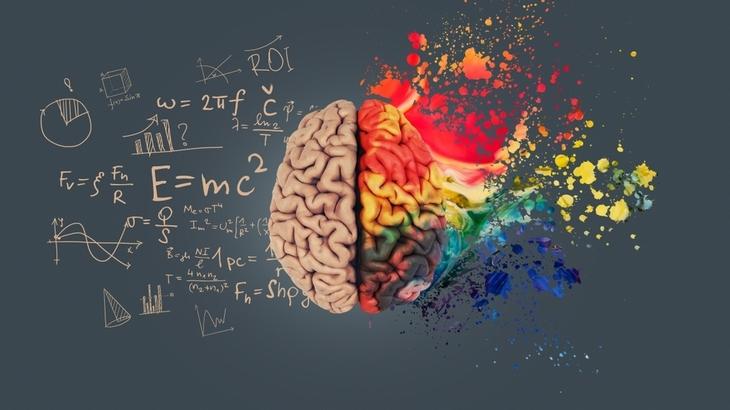
Your brain isn’t a single, uniform blob. It’s a complex organ with two main hemispheres that handle different tasks. The left side is generally the logical, analytical, linear-thinking boss (the one who loves bullet points). The right side is the creative, visual, intuitive, “let’s draw something crazy” artist. Traditional note-taking, with its endless lines and structured sentences, appeals almost exclusively to the left brain, leaving your right brain feeling neglected, bored, and probably doodling in the margins.
Mind maps, however, are like a fantastic brain party that invites both sides to dance! By using colors, images, varying line thickness, and non-linear associations, they tap into both hemispheres simultaneously. This dual-hemisphere activation doesn’t just make learning more fun; it makes it significantly more effective. When both sides of your brain are engaged, information is processed more deeply, leading to stronger, more resilient memory traces.
The benefits of engaging your whole brain with mind mapping for language learning are, frankly, astounding:
- Enhanced memory and recall: Information sticks like blue because you’re creating visual cues and unique associations. Your brain remembers pictures and relationships far better than isolated words on a line. Suddenly, that tricky grammar point isn’t just a rule; it’s a colorful spider diagram in your head.
- Improved understanding: Mind maps force you to identify key ideas and their relationships. This act of connecting the dots helps you grasp the “big picture” of a concept rather than getting lost in the weeds of individual facts. No more feeling like you’re drowning in a sea of disjointed vocabulary!
- Boosted creativity: When your brain is free to make non-linear connections, new ideas spark like fireworks on Chinese New Year. You might suddenly see patterns or links between characters you never noticed before.
- Better organization: Even the most jumbled thoughts can be neatly (and beautifully) arranged into a mind map.
- Increased engagement: Staring at a wall of text is about as exciting as watching paint dry. Mind mapping is interactive, personal, and actually fun. When you’re enjoying the process, you’re more likely to stick with it.
Studies show that mind mapping for language learning can improve comprehension and retention by up to 10-15% compared to linear note-taking. That’s like getting a significant memory upgrade just by changing how you doodle! Who knew learning could be so efficient and visually pleasing?
So, toss aside those dreary notebooks (for a bit, anyway) and give your brain the party it deserves.
Related Reading: Creative Ways to Immerse Yourself in Mandarin
The Chinese character conundrum (why mind maps are your Hanzi hero)

Chinese characters are beautiful, ancient, infuriatingly numerous little artistic masterpieces. Unlike your average alphabet, where 26 letters combine to form everything from “aardvark” to “zucchini,” Chinese characters are a whole different beast. Each one is almost a mini-word, a tiny picture, or a complex combination of smaller parts. We’re talking thousands upon thousands of these, each one a potential memory black hole if you’re relying on old-school methods.
When you see a word in English, you usually read it letter by letter, sounding it out. With Chinese characters, you’re not just sounding it out; you’re deciphering a miniature work of art, understanding its components, remembering its meaning, and recalling its Pinyin and its tone! It’s like trying to remember every single ingredient and step from a thousand different recipes all at once.
This is precisely where trying to learn with endless, flat lists of characters and their definitions falls flatter than a pancake in a vacuum. You miss the patterns, the relationships, the very essence of its beauty. The sheer volume and visual complexity of Chinese characters demand a smarter, more interconnected approach.
And that’s why a mind map for Chinese characters is your Hanzi hero in shining armor. These characters are inherently visual, often built from smaller, meaningful components (radicals). This component-based structure is practically begging to be mapped out!
- Radical relationships: Many characters share common radicals (like ‘口’ for mouth, or ‘木’ for wood). A mind map lets you visually group these, seeing how a shared component influences meaning.
- Semantic fields: Chinese vocabulary often clusters around themes. A mind map lets you connect characters that are semantically related, building webs of knowledge instead of isolated points.
- Visual distinctions: For those characters that look almost identical but have totally different meanings (the bane of many a learner’s existence!), a mind map can highlight those subtle differences with distinct branches, colors, or tiny, memorable doodles.
If your brain currently sees a Chinese character as a mysterious ink splat on a page, a mind map for Chinese characters is its Rosetta Stone, its decoder ring. It turns abstract strokes into meaningful, connected visuals, using your natural ability for visual learning to learn Chinese.
Related Reading: Creating a Language Learning Routine That Sticks
How to create a mind map (even if you can’t draw a stick figure)

You’re ready to ditch the linear monotony and embrace the vibrant chaos (well, organized chaos) of mind mapping. But perhaps a tiny, insecure voice in your head is whispering, “But I can’t even draw a convincing stick figure. Am I doomed to a life of un-mapped thoughts?”
Creating a mind map isn’t about artistic prowess; it’s about connecting ideas. If you can draw a circle and a line, you’re already halfway to becoming a mind mapping maestro.
Think of it less as “drawing” and more as “visually brainstorming.” The goal is flow and connection, not gallery-quality art. While you can certainly go digital with various apps, we often recommend starting with a big, blank piece of paper (or whiteboard!) and a set of colorful pens. There’s something wonderfully tactile and freeing about it.
Here’s your ridiculously simple guide on how to create a mind map that will make those Chinese characters stick:
The central idea
Every great mind map starts with a nucleus, a radiating knowledge point at its very core. This is your central idea, the main topic you’re exploring. For Chinese characters, this could be:
- A single, challenging character: Like ‘够’ (gòu – enough), that keeps slipping your mind.
- A tricky radical: Such as ‘氵’ (shuǐ – water radical), and you want to explore characters containing it.
- A confusing Pinyin sound: Maybe all the ‘jiā’ characters are blending together.
- A complex grammar pattern: Like the “把” (bǎ) structure.
Draw this central idea in the very middle of your page. Make it bold, maybe give it a little cloud or a wonky star outline. You can even include a tiny doodle that represents it. This is the heart of your mind map for Chinese characters.
Branches and their tones
From your glorious central idea, thick, curvy main branches will radiate outwards like spokes on a wonky, colorful wheel. Each main branch represents a major sub-topic or a key piece of information directly related to your central idea.
- For a character (e.g., ‘明’ míng – bright): You might have main branches for “Components,” “Meaning,” “Pronunciation/Tones,” “Related Words,” and “Example Sentences.”
- For a radical (e.g., ‘口’ kǒu – mouth radical): Main branches could be “Common Characters with 口,” “Meaning of Radical,” “Characters where 口 changes meaning.”
From these main branches, you’ll then draw thinner sub-branches for more detailed information. It’s like a tree growing, with a big trunk and smaller twigs. Remember to use curvy lines. Your brain loves organic shapes more than rigid straight lines.
Pro-Tip for Chinese: If a branch is about pronunciation, give it a specific color for tones or draw the tone mark right on the branch! This is a simple, effective mind mapping technique for visually learning Chinese.
Keywords, colors, and images are your brain’s best friends
This is where the magic really starts to happen, transforming your map from a mere diagram into a vibrant memory palace.
- Keywords: Each branch should ideally have only one keyword or a very short, memorable phrase. Your brain isn’t writing an essay here, it’s brainstorming. “Meaning” for ‘明’ becomes “Bright/Clear.” “Related Words” becomes “明天 (tomorrow).” Short, sharp, impactful.
- Colors: Assign a distinct color to each main branch and its sub-branches. This helps categorize information visually and makes your map incredibly easy to navigate and recall later. Green for “Components,” blue for “Meaning,” red for “Words with 明.” Your brain sees colors and instantly organizes information.
- Images/symbols: This is perhaps the most powerful part of visual learning Chinese! Next to each keyword or phrase, draw a tiny doodle or symbol that represents it. Even if you draw like a five-year-old on a sugar rush, your brain loves these personal symbols. For ‘明’ (bright), you could draw a tiny sun and moon. For ‘明天’ (tomorrow), maybe a little clock face. These personal, often silly, images are anchors for your memory.
Connecting the dots (and characters!)
Finally, don’t be afraid to draw arrows or dashed lines between different branches, even if they’re on different main branches. This shows relationships that might not be obvious at first glance. For example, an arrow from the “Sun (日)” component branch of ‘明’ to another character like ‘天’ (tiān – sky/day) that also uses the sun radical. This cross-pollination strengthens your overall understanding and memory network.
So, there you have it! The fundamental steps for creating a mind map. It’s intuitive, it’s personal, and most importantly, it’s a spectacularly effective technique for tackling the beautiful beast that is Chinese.
Related Reading: The Mandarin Blueprint Guide to Chinese Tone Marks
Mind mapping in summary
Mind mapping for language learning is a powerful visual strategy to organize thoughts and remember Chinese characters. By understanding how to create a mind map and applying effective mind mapping techniques, you can boost your memory and comprehension, making visually learning Chinese an incredibly effective part of your journey to fluency.
Mind mapping is your brain, unfettered and flourishing!
Mind mapping for language learning is a scientifically-backed superpower that turns the daunting task of remembering Chinese characters into an engaging and genuinely effective experience. By mastering how to create a mind map and applying these brilliant mind mapping techniques, you’re fundamentally changing how your brain processes and retains language. This is about unlocking your inner genius for visual learning Chinese, making every character, word, and grammar point stick like superglue to your linguistic cortex.
You’ve just unearthed the single most effective way to organize your thoughts and conquer Chinese characters. But what if you could immediately apply these powerful mind mapping techniques to master the absolute essentials of Chinese, all within 30 days and without spending a single penny?
We’re talking about more than just a quick lesson. We’re offering a comprehensive, results-driven starting point that integrates visually learning Chinese into every step, setting you up for unprecedented success.
This isn’t about some free trial. It’s an invitation to The Mandarin Blueprint Challenge. This groundbreaking program grants you full, lifetime access to our acclaimed curriculum and immerses you in a thriving community of over 1,600 passionate learners, all cheering you on. This invaluable package, brimming with structured lessons and bonus content, represents a phenomenal value designed to transform your learning trajectory.
Your moment of linguistic liberation is now. Don’t let your Chinese journey remain a disorganized tangle. Seize this opportunity to build a rock-solid foundation.
Enroll in The Mandarin Blueprint Challenge at no cost today and begin drawing your definitive path to Mandarin mastery.