
Booking Hotels and Accommodation in Mandarin: Essential Phrases

Are you planning a trip to China, and the thought of booking hotels leaves you feeling like you need a phrasebook the size of the Great Wall? Well, the panic is over because this guide is your secret weapon. We’re about to arm you with the essential Mandarin phrases to conquer check-in, charm concierges, and maybe even haggle for a better view (no promises!). Forget feeling lost in translation; we’re making booking Chinese hotel rooms as easy as ordering your favorite Kung Pao chicken.
Essential Chinese hotel vocabulary
Before you start picturing yourself sipping tea with a view of the Bund, let’s get down to the nitty-gritty: knowing your jiǔdiàn from your lǚguǎn.
- 酒店 (jiǔdiàn): This is your classic, often swanky, hotel. Think multiple stars, maybe a fancy lobby with a grand piano you’re too intimidated to touch. Just remember, sometimes jiǔdiàn can also mean “restaurant,” so context is your best friend here.
- 宾馆 (bīnguǎn): Your reliable, solid option. Think clean and comfortable, and it gets the job done without all the fuss.
- 旅馆 (lǚguǎn): Now we’re talking smaller, maybe a bit more budget-friendly. Think cozy inns or motels. Perfect if you’re planning on spending most of your time exploring and just need a comfy place to crash.
Knowing these differences isn’t just for showing off your Mandarin smarts (though it totally does that!). It’s practical! Searching for a jiǔdiàn when you’re dreaming of luxury will save you from scrolling through pages of charming-but-basic lǚguǎn.
Time for your essential toolkit! Here are some must-know nouns that’ll be your best buddies when tackling hotels in China:
| English | Pinyin | Chinese Characters |
| Hotel | jiǔdiàn / bīnguǎn / lǚguǎn | 酒店 / 宾馆 / 旅馆 |
| Room | fángjiān | 房间 |
| Front Desk | qiántái / fúwùtái | 前台 /服务台 |
| Key/Room Card | yàoshi / fángkǎ / ménkǎ / yàoshi kǎ | 钥匙 / 房卡 / 门卡 / 钥匙卡 |
| Bed | chuáng | 床 |
| Bathroom | wèishēngjiān / xǐshǒujiān / cèsuǒ | 卫生间 / 洗手间 / 厕所 |
| Luggage | xínglǐ | 行李 |
| Reservation | yùdìng | 预定 |
Notice how there are a few ways to say things like “Front Desk,” “Bathroom,” and especially “Key.” It’s not just the Mandarin language being playful! Sometimes, it’s about formality, sometimes, it’s regional slang, and sometimes, it’s just about whether you’re holding an old-school metal yàoshi or swiping a futuristic fángkǎ. Knowing these variations means you’ll be ready for anything they throw at you at the qiántái!
Related Reading: Off the Beaten Path: Exploring China’s Hidden Gems
Making inquiries — availability, dates, duration
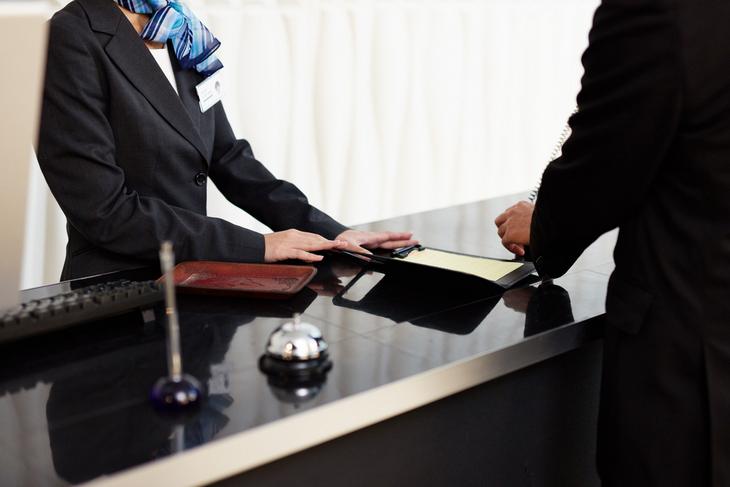
Alright, you’ve picked your Chinese hotel. Now you need to make sure they’ve actually got a room for you.
The go-to phrase you’ll want in your arsenal is:
你们有空房间吗? (Nǐmen yǒu kòng fángjiān ma?) — Got any spare rooms? (Think of kōng fángjiān as “empty room” — hopefully not too empty!). The nǐmen is just the polite way to say “you all” to the lovely folks at the front desk.
Uh oh, the dreaded words:
抱歉,现在已经客满,没有空房了。 (Bàoqiàn, xiànzài yǐjīng kèmǎn, méiyǒu kòng fáng le.) — Sorry, we’re totally packed, not a single room left. Kèmǎn is the key here — it means “full up.” Time to unpack your list of backup hotels in China!
Now, for nailing down those dates:
Want to tell them when you’ll be gracing them with your presence? Use this handy structure: 从 [Start Date] 到 [End Date] (Cóng [Start Date] dào [End Date]) — From [Start Date] to [End Date].
For example:
从本月15号到23号。 (Cóng běn yuè shíwǔ hào dào èrshísān hào.) — From the 15th to the 23rd of this month. See that little 号 (hào)? That’s your day of the month. Use it!
Let’s see some examples:
- 住一个星期 (Zhù yī gè xīngqī) — Staying for one week. That 个 (gè) is a super common measure word. Get used to it!
- 住两个晚上 (Zhù liǎng gè wǎnshang) — Staying for two nights. Notice we use 两 (liǎng) for “two” when it’s with a measure word. Tricky, right?
- 住三晚 (Zhù sān wǎn) — Staying three nights. See how wǎn is a shorter way to say “night”?
- 我要在这里住三个星期 (Wǒ yào zài zhèlǐ zhù sān gè xīngqī) — I want to stay here for three weeks. Feeling confident? You should be!
- 我们会在这里待两周 (Wǒmen huì zài zhèlǐ dāi liǎng zhōu) — We will stay here for two weeks. And dài is another word for “to stay” – bonus vocabulary points for you!
See how these examples show you exactly how to string together numbers, those quirky measure words (like our friend gè), and time units like xīngqī (week) and wǎnshang (night)? Master this pattern, and you can tell them you’re staying for two days, ten months, or even a millennium (though they might have some questions about that last one).
Related Reading: Creative Ways to Immerse Yourself in Mandarin
Discussing room types and preferences
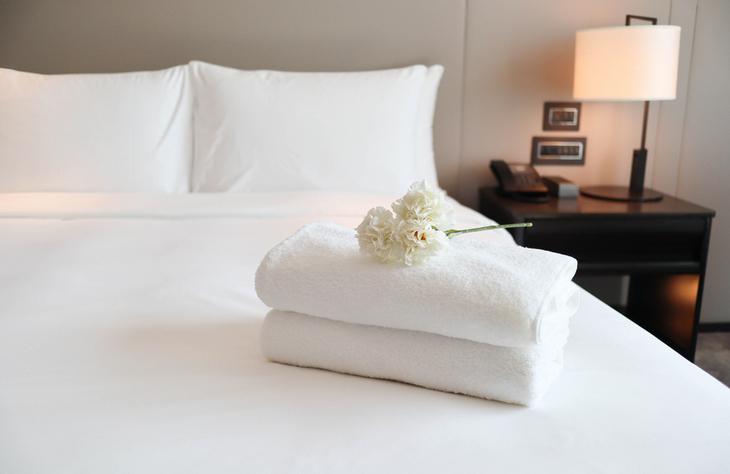
So, they’ve got rooms! Awesome. But, not all hotels in China are created equal when it comes to room types. Let’s get you speaking the lingo to snag your ideal setup.
First up, the essentials:
- 单人间 (dānrénjiān) / 单人房 (dānrénfáng): Your classic single room. Perfect for solo adventurers or those who need their personal bubble. Notice both 间 (jiān) and 房 (fáng) mean “room” — Mandarin likes to keep things interesting!
- 双人间 (shuāngrénjiān) / 双人房 (shuāngrénfáng): The double room. Ideal for couples or close friends who don’t mind sharing (or flipping a coin for the extra blanket!).
- 套房 (tàofáng): Ah, the suite! Living the high life? You’ve got options here:
- 普通套房 (pǔtōng tàofáng): Your general suite, often with extra space to spread out.
- 商务套房 (shāngwù tàofáng): The business suite — probably comes with a fancy desk and maybe even a printer (if you’re really unlucky).
- 总统套房 (zǒngtǒng tàofáng): The presidential suite. If you’re booking this, you probably don’t need our Mandarin tips, but hey, good for you!
Now, to actually ask for what you want, keep it simple with:
我要 [Room Type]. (Wǒ yào [Room Type].) — I want a [Room Type].
For example:
我要双人房。 (Wǒ yào shuāngrénfáng.) — I want a double room. Straight to the point!
Or, if you’re feeling a tad more formal:
我需要一个 [Room Type]. (Wǒ xūyào yīgè [Room Type].) — I need a [Room Type].
Like:
我需要一个双人房。 (Wǒ xūyào yīgè shuāngrénfáng.) — I need a double room.
Let’s talk beds! Because a “double room” in one Chinese hotel might not be the “double bed” you’re dreaming of:
- 单人床 (dānrénchuáng): A single bed. For one sleepyhead.
- 双人床 (shuāngrénchuáng): A double bed. For cozy couples.
- 大床房 (dàchuángfáng): A room with one big bed (think Queen or King). Perfect for starfish sleepers!
- 标准间 (biāozhǔnjiān): Now, this one’s a bit sneaky! While it generally means “standard room,” in China, it often specifically means a room with two single beds (a twin-bed room). So, unless you’re planning an epic pillow fight, it’s best to be specific!
Avoid any confusion by asking directly about the bed situation:
房间里是双人床吗? (Fángjiān lǐ shì shuāngrénchuáng ma?) — Does the room have a double bed?
Or by clearly requesting:
两张单人床 (liǎng zhāng dānrénchuáng) — Two single beds.
Beyond the beds, let’s nail down some other crucial preferences for your hotels in China stay:
- Non-smoking: The magic words are 无烟 (wúyān). To inquire:
- 有没有无烟房间? (Yǒu méi yǒu wúyān fángjiān?) — Do you have any non-smoking rooms? (This is an important question if you don’t want to wake up smelling like an ashtray!).
- 房间是无烟的吗? (Fángjiān shì wúyān de ma?) — Is the room non-smoking?
- View: Want to feast your eyes on something pretty?
- 海景房 (hǎijǐng fáng): A sea view room.
- Example: 我们想要一间海景房。 (Wǒmen xiǎng yào yī jiān hǎi jǐng fáng.) — We’d love an ocean view room.
- For a general good view: 有景观的房间 (yǒu jǐngguān de fángjiān).
- Example: 可以给我安排一个有景观的房间吗? (Kěyǐ gěi wǒ ānpái yī gè yǒu jǐngguān de fángjiān ma?) — Could you arrange a room with a view for me?
- Quiet room: If you value your sleep (and who doesn’t on vacation?), ask for: 安静的房间 (ānjìng de fángjiān).
- Example: 我要一间安静的房间。(Wǒ yào yī jiān ānjìng de fángjiān.) — I want a quiet room. (Hopefully, far away from the ice machine and chatty neighbors!).
Finally, a little tip on how to phrase your requests in Chinese hotels:
You can be direct with 我要 (Wǒ yào…) — “I want…” or a touch more polite by asking 有没有 (Yǒu méi yǒu…?) — “Do you have…?” It’s the difference between saying “Give me a cookie!” and “Do you have any cookies?” Both might get you a cookie, but one’s a little sweeter!
Related Reading: 5 Chinese Expressions That Will Make You Sound Like a Native Speaker
Asking about price and inclusions
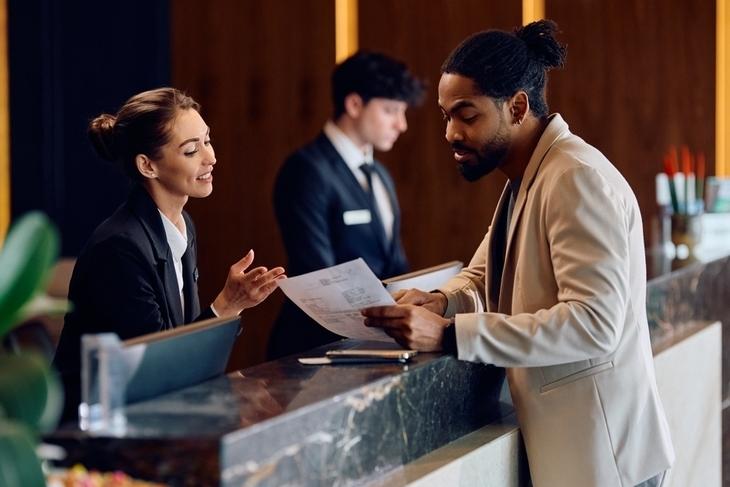
You’ve found your room, now for the moment of truth. How much will this slice of temporary paradise set you back? And what delightful extras are thrown in? Let’s get you asking about the price and those all-important inclusions.
The fundamental question you’ll need is:
多少钱? (Duōshǎo qián?) — How much? Simple, effective, and you can slap it onto the end of a sentence after you’ve mentioned the room and duration.
For more specific nightly rates at hotels in China:
房间一晚多少钱? (Fángjiān yī wǎn duōshǎo qián?) — How much is the room per night? This is your bread and butter for figuring out the daily damage to your wallet.
Or, if you’re planning a longer stint:
房间一周多少钱? (Fángjiān yī zhōu duōshǎo qián?) — How much is the room per week?
Putting it all together:
单人间,住两个晚上多少钱? (Dānrénjiān, zhù liǎng gè wǎnshang duōshǎo qián?) — How much is a single room for two nights? Now you’re combining everything like a pro!
And a typical answer you might get:
两个晚上四百块。 (Liǎng gè wǎnshang sìbǎi kuài.) — 400 kuài for two nights. Ah, kuài — the everyday way to say Chinese money (Renminbi or RMB). Remember that one!
Now, let’s get to the crucial question on everyone’s mind: the freebies! Breakfast is a big thing in Chinese hotels, and it’s not always a given.
Here are a few ways to ask about the most important meal of the day (especially when it’s free!):
- 包早饭吗? (Bāo zǎofàn ma?) — Does it include breakfast? Short, sweet, and to the point.
- 房费包含早餐吗? (Fángfèi bāohán zǎocān ma?) — Does the room rate include breakfast? Fángfèi means “room charge” — good to know!
- 请问这个价格包括早餐吗? (Qǐngwèn zhège jiàgé bāokuò zǎocān ma?) — Excuse me, does this price include breakfast? A polite and comprehensive way to ask.
- 酒店提供早餐吗? (Jiǔdiàn tígōng zǎocān ma?) Does the hotel provide breakfast?
Want to try your luck at saving a few yuan? You can always ask:
- 有没有折扣? (Yǒu méi yǒu zhékòu?) — Are there any discounts? Keep your eyes (and ears) peeled for signs or online ads. Who knows, you might just snag a bargain!
Related Reading: Mandarin for Travelers: Essential Phrases
Making and confirming a Chinese hotel reservation
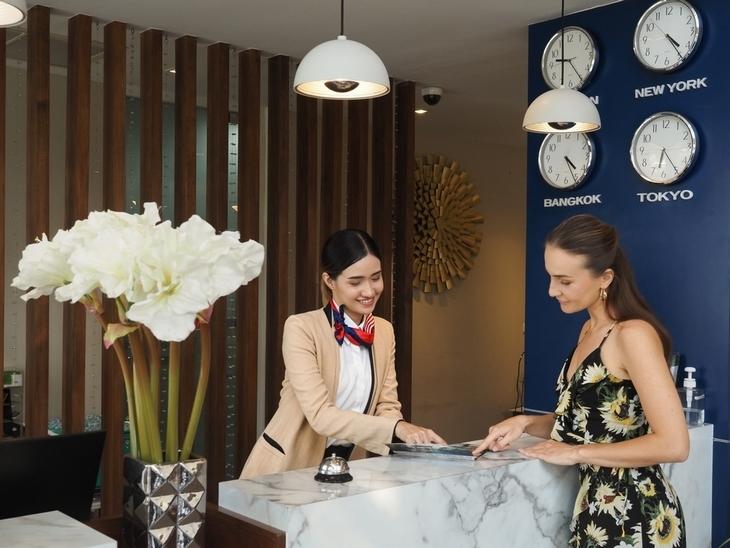
Alright, the moment we’ve all been waiting for: sealing the deal and making that reservation!
Ready to commit? Here are a couple of ways to say “I want to book a room:”
- 我想预订一个房间。 (Wǒ xiǎng yùdìng yīgè fángjiān.) — I’d like to book a room.
- 我想订一间房间。 (Wǒ xiǎng dìng yī jiàn fángjiān.) — I’d like to book a room. Notice that yùdìng and dìng both mean “to book” or “to reserve.” Knowing both will make you a Mandarin booking boss!
And once you’ve hammered out the specifics:
- 我想预定这个房间。 (Wǒ xiǎng yùdìng zhège fángjiān.) — I’d like to reserve this room. Pointing is optional but adds emphasis!
Now, for the less glamorous but essential part: the admin. Be prepared to share:
- Name (名字 míngzi): You can simply say: 我的名字是… (Wǒ de míngzi shì…) – My name is…
- Passport (护照 hùzhào): Get ready for this one! The staff will likely ask: 请给我你的护照。 (Qǐng gěi wǒ nǐ de hùzhào.) — Please give me your passport. You can hand it over with a confident: 这是我的护照。 (Zhè shì wǒ de hùzhào.) — This is my passport. Heads up: showing your passport is often a must-do for foreigners checking into hotels in China. It’s not just hotel policy; it’s for police registration. So, don’t be surprised!
- Passport number (护照号码 hùzhào hàomǎ): You might also need to state: 我的护照号码是… (Wǒ de hùzhào hàomǎ shì…) — My passport number is…
- You might also be asked for your phone number (电话 diànhuà) or email.
Already booked your Chinese hotel? Time to confirm like a boss:
To let them know you’re not a walk-in:
- 我预订了。 (Wǒ yùdìng le.)
- 我已经预定了。 (Wǒ yǐjīng yùdìng le.) — I’ve already made a reservation.
- 我有一个预订。 (Wǒ yǒu yīgè yùdìng.) — I have a reservation.
The hotel staff might greet you with the following:
- 请问您有预定吗? (Qǐngwèn nín yǒu yùdìng ma?) — Do you have a reservation?
And to take the initiative and confirm:
- 我想确认一下我的预定。 (Wǒ xiǎng quèrèn yīxià wǒ de yùdìng.) — I’d like to confirm my reservation.
Have your booking reference handy!
- 我的预定号码是… (Wǒ de yùdìng hàomǎ shì…) — My reservation number is…
Finally, let’s talk about the inevitable: paying for your lovely China hotel stay. This might happen now or at check-in:
- Deposit (押金 yājīn): Be prepared — you’ll often need to put down a deposit when you arrive.
- Credit Card (信用卡 xìnyòngkǎ): To ask if plastic is welcome: 请问是否可以用信用卡支付? (Qǐngwèn shìfǒu kěyǐ yòng xìnyòngkǎ zhīfù?) — Excuse me, can I pay by credit card?
- Cash (现金 xiànjīn): The old reliable!
- Mobile payment: In China, Alipay (支付宝 Zhīfùbǎo) and WeChat Pay (微信 Wēixìn) are HUGE. To ask about using them: 我可以用支付宝/微信支付吗? (Wǒ kěyǐ yòng Zhīfùbǎo / Wēixìn zhīfù ma?) — Can I pay with Alipay/WeChat Pay? (Bonus points if you already have these set up!).
How’s that for handling the reservation process? Let’s move on to what you can ask for once you’re actually in the hotel!
Related Reading: Psychological Tricks and Tips for Learning Chinese
Inquiring about facilities and services
You’re in! Whether you’re looking to hit the gym, grab a bite, or just need to connect to the digital world, knowing how to ask is key.
Two super useful ways to ask if something exists:
- 有没有? (Yǒu méi yǒu?) — Do you have…? (Simple and direct!)
- 请问你们提供 吗? (Qǐngwèn nǐmen tígōng ma?) — Excuse me, do you offer…? (A bit more polite.)
Now, let’s get down to the specifics for those essential hotel amenities:
- Wi-Fi/Internet: Your lifeline to the outside world!
- Terms you’ll hear: 无线网络 (wúxiàn wǎngluò), 网络 (wǎngluò), or 无线上网 (wúxiàn shàngwǎng). And the magic words: 免费的无线网络 (Miǎnfèi de wúxiàn wǎngluò) — Free WIFI!
- Asking about availability: 有没有免费的无线网络? (Yǒu méi yǒu miǎnfèi de wúxiàn wǎngluò?) Or, specifically for your room: 请问,房间里有Wifi吗? (Qǐng wèn, fáng jiān lǐ yǒu Wifi ma?)
- Password (密码 mìmǎ): 请问Wi-Fi密码是什么? (Qǐngwèn Wi-Fi mìmǎ shì shénme?) — What’s the Wifi password? (Write this one down!).
- Restaurant (餐厅 cāntīng): For fueling your adventures (or recovering from them!): 你们有餐厅吗? (Nǐmen yǒu cāntīng ma?) — Do you have a restaurant?
- Gym (健身房 jiànshēnfáng): For burning off those delicious dumplings: 你们有健身房吗? (Nǐmen yǒu jiànshēnfáng ma?) — Do you have a gym?
- Swimming pool (游泳池 yóuyǒngchí): For a refreshing dip after a day of exploring.
- Parking Lot (停车场 tíngchēchǎng): Essential if you’re road-tripping through China.
- Elevator (电梯 diàntī): Especially important if you’re on the 17th floor! To find it: 电梯在哪里? (Diàntī zài nǎlǐ?) — Where is the elevator?
- Laundry service (洗衣服务 xǐyī fúwù): For when that suitcase starts smelling a little too “authentic.” And for dry cleaning: 干洗服务 (gānxǐ fúwù).
- Room service (客房服务 kèfáng fúwù): For those moments when leaving your room feels like too much effort.
- Wake-up call (叫醒服务 jiàoxǐng fúwù): Don’t miss that early morning tour! You can ask: 可以帮我安排早上六点的叫醒服务吗? (Kěyǐ bāng wǒ ānpái zǎoshang liù diǎn de jiàoxǐng fúwù ma?) — Could you arrange a wake-up call for 6 am? Or, more directly: 请 [Time] 叫醒我。 (Qǐng [Time] jiàoxǐng wǒ.) — Please wake me up at [Time].
- Airport transport (接机服务 jiējī fúwù / 送机服务 sòngjī fúwù): For a smooth arrival or departure. Jiējī is pickup, sòngjī is drop-off.
Now, let’s talk about what’s in your room at your China hotel:
- General question: 请问您的房间有什么样的设施? (Qǐngwèn nín de fángjiān yǒu shénme yàng de shèshī?) — What kind of amenities do your rooms have?
- Hair dryer (吹风机 chuīfēngjī): For taming that travel hair: 我可以借一个吹风机吗? (Wǒ kěyǐ jiè yīgè chuīfēngjī ma?) — Can I borrow a hairdryer?
- Towels (毛巾 máojīn): Essential for obvious reasons! Need extras? 你们有多余的毛巾吗? (Nǐmen yǒu duōyú de máojīn ma?) Or fresh ones? 我需要干净的毛巾。(Wǒ xūyào gānjìng de máojīn.) — I need clean towels.
- Blanket (毛毯 máotǎn): For those chilly nights: 可以给我一条额外的毛毯吗? (Kěyǐ gěi wǒ yī tiáo éwài de máotǎn ma?) — Could I have an extra blanket?
- Private bathroom (独立卫生间 dúlì wèishēngjiān): A must for many! 客房带独立卫生间吗? (Kèfáng dài dúlì wèishēngjiān ma?) — Does the guest room come with a private bathroom?
- Air conditioning (空调 kōngtiáo): Especially crucial in the summer! If it’s on the fritz: 我房间里的空调坏了。 (Wǒ fángjiān lǐ de kōngtiáo huàile.) — The air conditioner in my room is broken.
Remember the difference between asking if something exists (using 有没有? or 请问你们提供 吗?) and requesting a service (often using 请 Qǐng… or 可以给我 Kěyǐ gěi wǒ…?). Also, keep an eye out for 服务 (fúwù), which means “service” — it pops up in lots of helpful terms!
Related Reading: China’s Ghost Cities: Unraveling the Myth and Reality
Checking into a Chinese hotel
You’ve made it! Stepping into the lobby of your Chinese hotel is the first step to settling in. Let’s nail that check-in so you can get to the important business of relaxing (or exploring!).
First impressions matter! Start with a friendly:
- 你好 (Nǐ hǎo) — Hello. (A universal greeting that always works!)
Next, let them know if you’ve got a booking for their hotel:
- If you’re prepared: 我预订了。 (Wǒ yùdìng le.), 我已经预定了。 (Wǒ yǐjīng yùdìng le.), or 我有一个预订。 (Wǒ yǒu yīgè yùdìng.) — I have a reservation.
- More comprehensive? 你好,我有一个预订。你能帮我办理入住吗? (Nǐ hǎo, wǒ yǒu yīgè yùdìng. Nǐ néng bāng wǒ bànlǐ rùzhù ma?) — Hello, I have a reservation. Can you help me with the check-in? The key phrase here is 办理入住 (bànlǐ rùzhù), which means “to process check-in.”
If you’re feeling spontaneous and didn’t book ahead (you brave soul!):
- 我没有预定。 (Wǒ méiyǒu yùdìng.) — I don’t have a reservation. Followed quickly by: 你们有空房间吗? (Nǐmen yǒu kòng fángjiān ma?) — Do you have any available rooms? Fingers crossed!
When they ask for your passport (and they will, especially in Chinese hotels for foreign guests):
- Hand it over confidently while saying: 这是我的护照。 (Zhè shì wǒ de hùzhào.) — This is my passport. Remember, this isn’t just them being nosy; it’s standard procedure.
Getting your keys to your hotel room:
- The staff will likely hand over your key or room card with: 这是你的钥匙/房卡。 (Zhè shì nǐ de yàoshi / fángkǎ.) — This is your key/room card.
And tell you where to find your temporary abode:
- 您的房间号码是 [Number]。 (Nín de fángjiān hàomǎ shì [Number].) — Your room number is [Number]. (Try to remember it — wandering the halls aimlessly isn’t the best start to your stay!).
Finally, if you need to know the lay of the land regarding timings at hotels in China:
- Asking about check-in time: 请问几点可以办理入住? (Qǐngwèn jǐ diǎn kěyǐ bànlǐ rùzhù?) — What time is check-in? Or: 什么时候可以入住? (Shénme shíhòu kěyǐ rùzhù?) — When can I check in? (Standard is often 2 pm, or 14:00).
- Asking about check-out time (using 退房 tuìfáng – check out): 请问几点退房? (Qǐngwèn jǐ diǎn tuìfáng?) – What time is check-out? (Often around noon).
Knowing this flow will make you feel like a seasoned pro. Now, go get that room key and start exploring!
Related Reading: The Art of Asking Questions in Chinese
Checking out of a hotel in China
All good things must come to an end, even a delightful stay in a Chinese hotel. But don’t worry; checking out is usually a breeze. Here’s how to gracefully make your exit.
When you’re ready to say zàijiàn to your room, the most direct way to announce your departure is:
- 我要退房。 (Wǒ yào tuìfáng.) — I want to check out. Simple and effective. The key term here is 退房 (tuìfáng), which literally means “return room.” Remember that one!
Or, if you’re feeling a tad more formal:
- 你好,我想办理退房。 (Nǐ hǎo, wǒ xiǎng bànlǐ tuìfáng.) — Hello, I would like to check out. Here, 办理退房 (bànlǐ tuìfáng) means “to process check-out.”
Got some unusual timing for your grand exit from your Chinese hotel?
- For an early getaway: 我能提前办理退房吗? (Wǒ néng tíqián bànlǐ tuìfáng ma?) — Can I check out early? (Maybe you have a super early flight to catch those amazing sunrise views!).
- Hoping for a bit more snooze time? 我可以延迟退房吗? (Wǒ kěyǐ yánchí tuìfáng ma?) — Can I check out later? Just be aware that this often depends on how busy they are and might come with an extra charge).
Now for the inevitable part: settling the bill (账单 zhàngdān):
- To request it: 请结账。 (Qǐng jiézhàng.) — Please settle the bill. Or: 请给我账单。 (Qǐng gěi wǒ zhàngdān.) – Please give me the bill.
- When they present it: 这是您的账单。 (Zhè shì nín de zhàngdān.) — Here is your bill. (Time to see if that room service splurge was worth it!).
- Spotting something amiss? 账单不对。 (Zhàngdān bú duì.) — The bill is incorrect.
And for the business travelers (or anyone who needs official proof of their stay in a China hotel):
- Need an official receipt (发票 fāpiào)? Ask: 请问是否可以开具发票? (Qǐngwèn shìfǒu kěyǐ kāijù fāpiào?) — Excuse me, can you issue an official receipt (fapiao)? This is different from a regular till slip (小票 xiǎopiào) and is often required for expense reimbursement.
And with that, you’re all set to check out of your Chinese hotel!
Related Reading: The Psychology of Language Learning (and the Mental Blocks That Hold You Back)
Effortless hotel stays await in China!
Are you tired of travel guides that leave you feeling more bewildered than prepared for booking hotels in China? Imagine gliding through check-in, effortlessly securing your perfect room in countless Chinese hotels, and confidently asking for exactly what you need, all thanks to a handful of powerful Mandarin phrases. This guide should have turned your accommodation experiences from daunting to delightful.
But what if you could extend that feeling of confident connection beyond hotel lobbies and into every aspect of your China adventure? We know you’re intrigued by the prospect of unlocking communication, and we’re here to tell you that your journey to Mandarin mastery can begin today — absolutely FREE!
Picture lifetime access to a revolutionary curriculum, a vibrant community of over 1,600 fellow learners cheering you on, and the exhilarating feeling of finally understanding and being understood. That’s exactly what awaits you with The Mandarin Blueprint Challenge. Forget dry textbooks and endless grammar drills; we’ve cracked the code to engaging and effective language acquisition.
Don’t let this opportunity slip through your fingers! For a limited time, register for the challenge and unlock course materials and incredible bonuses valued at a staggering $1,996 — yours completely free. This isn’t just about booking hotels in China; it’s about opening doors to a whole new world. Take the first exhilarating step towards fluency. Your Mandarin adventure starts now!