China’s High-Speed Rail: Everything You Need to Know (In Mandarin!)
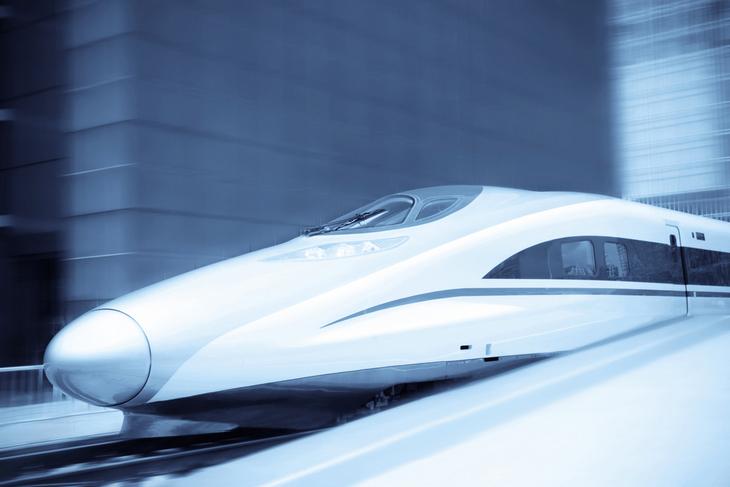
If you’ve ever dreamed of zipping across a country at 350 km/h while sipping green tea and admiring the countryside, then China has got you covered. The high-speed rail system in China, also known as 高铁 (gāotiě), is not just a transportation marvel. It’s a cultural experience, a linguistic opportunity, and a glimpse into one of the world’s most impressive infrastructure feats.
If you’re a Mandarin learner, a traveler, or just curious about high-speed Chinese transport, this guide will take you on a ride, literally and linguistically. From booking your first ticket to tackling train stations with confidence, here’s everything you need to know about China’s high-speed rail (with useful Mandarin phrases along the way).
What is the high-speed rail in China?
China’s high-speed rail network is the largest and most advanced in the world. With over 40,000 kilometers of dedicated high-speed track—and growing—it connects nearly every corner of the country.
Whether traveling from the bustling metropolis of Beijing to the coastal charm of Ziamen or from the economic hub of Shanghai to the scenic mountain town of Huangshan, high-speed rail has transformed how people move around China.
The system was launched in 2008 with the Beijing-Tianjin line and has since expanded at a breathtaking pace, reflecting China’s commitment to infrastructure development and national connectivity.
High-speed trains in China are categorized by the letters G, D, and C:
- G trains (高速 gāosù) are the fastest, reaching top speeds of 350 km/h. They usually run on the newest tracks and connect major cities.
- D trains (动车 dòngchē) operate at slightly lower speeds (usually around 250 km/h) and serve both major and secondary routes.
- C trains (城际 chéngjì) are intercity trains designed for shorter regional commutes between nearby cities and towns.
These trains are not only fast but also known for their precision. Delays are rare, and departure times are so reliable that locals often plan their connections down to the minute. Real-time updates and digital enhancements enhance the passenger experience.
Inside, the trains are modern, air-conditioned, and well-maintained. Most feature soft seating, tray tables, power outlets, and onboard attendants. Even second-class seating, which is the most economical option, offers comfortable accommodations suitable for long journeys.
Low cost for high mobility
Even better is that tickets are priced to be accessible. A trip between Beijing and Shanghai, roughly the same distance between New York and Chicago, can cost as little as 550 CNY (around $75 USD) in second class. It’s also significantly more affordable if you book early. The affordability of high-speed rail, combined with the time saved and comfort provided, makes it an unbeatable option for business and leisure travelers.
China’s investment in high-speed rail is not just about convenience. It’s about reshaping the country’s mobility patterns. The system has effectively shortened the perceived distances between cities, making weekend getaways, regional tourism, and long-distance commuting more practical than ever before.
Quick Vocabulary:
- 高铁 (gāotiě) — high-speed rail
- 火车 (huǒchē) — train
- 动车 (dòngchē) — bullet train
- 城际列车 (chéngjì lièchē) — intercity train
- 铁路 (tiělù) — railway
Why you should travel by high-speed train
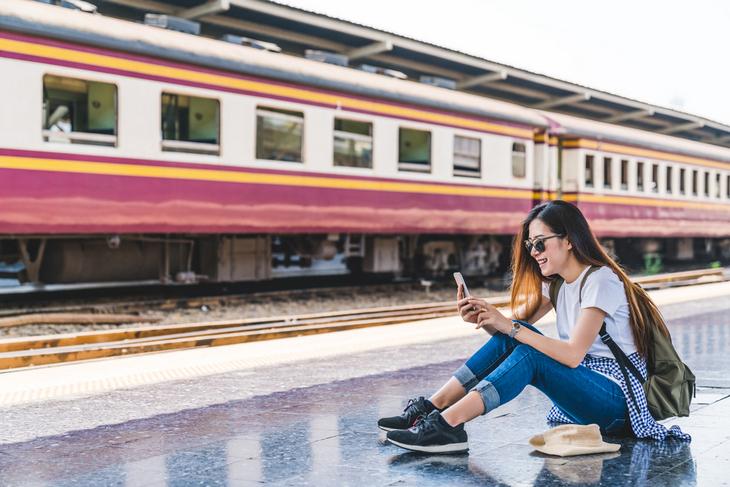
There are several compelling reasons why China’s high-speed trains have become the preferred mode of transportation for locals, expats, and tourists alike. It’s not just about getting from point A to B. It’s about how you experience the journey.
Speed
China’s high-speed (高铁 gāotiě) trains are a technological marvel. On a G-series train, the journey from Beijing to Shanghai, spanning more than 1,300 kilometers, can take as little as 4.5 hours. That’s faster than more domestic flights when you account for time spent in security lines, check-in, boarding, taxiing, baggage claim, and airport transfers.
Train stations are centrally located, reducing the total door-to-door travel time. The time savings are even more impressive for regional travel, such as Shanghai to Hangzhou or Guangzhou to Shenzhen, sometimes less than one hour.
Comfort
From a traveler’s perspective, the comfort of China’s high-speed train rivals, and often exceeds, air travel. Second-class carriages feature cushioned seats arranged in a 3-2 configuration, plenty of legroom, fold-down tray tables, overhead luggage racks, and access to a clean restroom.
First-class upgrades you to wider, reclining seats in a 2-2 layout with quieter surroundings and more personal space. Business class feels like a luxury lounge. Think leather recliners that fully extend into flat beds, USB ports, hot towels, and meal service. Passengers can stretch, walk around, and avoid turbulence common in the skies.
Scenic routes
Riding the train in China offers a unique front-row seat to the country’s beautiful landscape. One minute, you’re passing high-tech industrial zones and urban skylines; the next, you’re gliding through emerald rice paddies, misty hills, tea plantations, or historic villages.
Some routes, like the one between Chengdu and Kunming, offer dramatic views of terraced fields and mountainous terrain. It’s a moving postcard showcasing the ancient and modern sides of China. If you want to experience the country’s geographical diversity without multiple connecting flights or endless hours on a bus, high-speed rail is the way to go.
Linguistic bonus
For language learners, high-speed rail doubles as a rolling classroom. From the moment you enter the station, you’re surrounded by Mandarin on signs, announcements, and digital displays. Buying tickets, asking for directions, or simply reading your boarding pass offers real-life opportunities to practice.
Train announcements are typically delivered in both Mandarin and English, but you’ll find it incredibly rewarding to understand the Chinese first. Want to practice small talk? Sit next to a local and ask, “你是哪里人?” (Nǐ shì nǎlǐ rén? — Where are you from?). It’s immersion, with subtitles, safety, and a cup of hot green tea.
Related Reading: The Mandarin Blueprint Guide to Chinese Homonyms and Homophones
Booking your high-speed rail ticket
You can book tickets through multiple channels, depending on your language skills and comfort level.
Option 1: Online apps
- 1206.cn — The official railway booking site (Mandarin only)
- Trip.com — Offers English support and customer service
- Fliggy (飞猪) — Popular Chinese travel app with good train coverage
Option 2: In-person at the train station
This is a great opportunity to practice Mandarin. Lines can be long, but it’s doable.
Phrases to use:
- “我要买一张去北京的高铁票。” (Wǒ yào mǎi yī zhāng qù Běijīng de gāotiě piào.) — I want to buy a high-speed train ticket to Beijing.
- “几点出发?” (Jǐ diǎn chūfā?) —What time does it depart?
- “有没有靠窗的座位?” (Yǒu méiyǒu kào chuāng de zuòwèi?) — Do you have a window seat?
Things to know:
- Tickets open 15 days in advance
- You’ll need your passport to book
- Tickets sell fast during holidays, so book early
Understanding ticket types and seating classes
Chinese trains offer several classes:
- 商务座 (shāngwù zuò) — Business class: wide reclining seats, complimentary meals
- 一等座 (yī děng zuò) — First class: more spacious and quieter
- 二等座 (èr děng zuò) — Second class: standard seating, affordable
- 无座 (wú zuò) — No seat: standing room only (common during holidays)
If you’re learning Mandarin, second class is great for exposure. You’ll be surrounded by locals and everyday conversations.
Seat numbers are marked on your ticket. Boarding gates (检票口 jiǎnpiào kǒu) are clearly listed on screens at the station.
Exploring the train station
Chinese train stations are modern but can be overwhelming. Arrive at least 45-60 minutes before departure, especially at larger hubs like Beijing South (北京南站 Běijīng Nán Zhàn) or Shanghai Hongqiao (上海虹桥站 Shànghǎi Hóngqiáo Zhàn).
Steps to follow:
- Enter through security (show passport and ticket)
- Locate your departure hall (候车室 hòuchē shì)
- Wait at your gate until boarding is announced
- Scan your ticket (or passport if e-ticket) to board
Signs are often bilingual (Chinese and English), but knowing a few key terms helps:
- 出发 (chūfā) — departure
- 到达 (dàodá) — arrival
- 检票口 (jiǎnpiào kǒu) — ticket check gate
- 候车室 (hòuchē shì) — waiting area
- 站台 (zhàntái) — platform
Onboarding etiquette and what to expect

High-speed trains in China are clean, quiet, and impressively well-organized. The experience is designed for comfort, efficiency, and respect for fellow passengers. If it’s your first time on board, here’s what to expect and how to behave like a seasoned traveler.
Talking
The atmosphere on most high-speed trains is calm and relatively quiet. Loud phone conversations or boisterous chatter are generally frowned upon. If you need to take a call, speak softly or step into the area between train cars, where you’ll find a vestibule with space for quiet conversations.
Pro tip: You might hear a train attendant politely remind someone to lower their voice using phrases like: “请小声一点” (qǐng xiǎoshēng yīdiǎn) – Please speak more quietly.
Eating
Eating on board is allowed, and many passengers bring their own meals from home or purchase food at the station. Attendants roll carts through the aisles selling snacks, instant noodles, drinks, and hot boxed meals known as 便当 (biàndāng). These meals usually include rice, meat, pickled vegetables, and sometimes a small dessert.
You can request hot water, tea, or noodles from the communal dispenser near the restroom. Just remember to dispose of waste properly and avoid strong-smelling foods like durian or fermented tofu.
Toilets
Modern high-speed trains are equipped with clean, Western-style toilets. Each carriage typically has at least one restroom and a sink area. That said, amenities may vary depending on the train model and route. Bring your own tissue and hand sanitizer just in case, as toilet paper is not always replenished mid-journey.
Some trains also feature accessible toilets for passengers with disabilities, as well as baby-changing stations.
Smoking
Smoking is strictly prohibited on high-speed trains, including in restrooms and vestibules. Trains are equipped with sensitive smoke detectors, and violations are taken seriously. Fines are common, and in some cases, offenders can be banned from future rail travel.
Common announcement:
“为了您的安全,请不要在车厢内吸烟。”
(Wèile nín de ānquán, qǐng bùyào zài chēxiāng nèi xīyān) – For your safety, please do not smoke inside the train.
Cleanliness and trash disposal
Train attendants pass through regularly to collect trash, but you’ll also find small bins at the ends of each carriage. Keeping your space tidy is expected, and cleanliness is a big part of the high-speed rail culture.
Luggage
Overhead racks above your seat are designated for smaller bags, while larger suitcases can be placed in the designated luggage area at the end of the carriage. There’s no check-in process, so keep valuables with you. Be considerate when lifting heavy bags into overhead compartments.
Interacting with train staff
Train attendants (列车员 lièchēyuán) wear uniforms and are generally very helpful. If you need assistance, don’t hesitate to ask. Even a basic request like: “请帮我一下” (Qǐng bāng wǒ yīxià — Please help me) will usually result in a friendly response.
Helpful Mandarin phrases
- “这个座位是我的吗?” (Zhège zuòwèi shì wǒ de ma?) — Is this my seat?
- “请问洗手间在哪儿?” (Qǐngwèn xǐshǒujiān zài nǎr?) — Where is the restroom?
- “可以给我一杯热水吗?” (Kěyǐ gěi wǒ yī bēi rèshuǐ ma?) — Can I have a cup of hot water?
- “请问几点到?” (Qǐngwèn jǐ diǎn dào?) — What time do we arrive?
Related Reading: Healthy Eating, Chinese Style: Learn the Language of Nutrition
Popular high-speed rail routes in China
Some of the most popular and scenic routes include:
- Beijing → Shanghai: 4.5-6 hours
- Beijing → Xi’an: 4.5-6 hours
- Chengdu → Chongqing: 1.5 hours
- Guangzhou → Shenzhen → Hong Kong: 1 hour to Shenzhen, 2 hours total to Hong Kong
Each station is modern, and the journey feels more like domestic air travel with fewer delays and less stress.
Key Mandarin phrases for high-speed train travel
Here’s a mini phrasebook to help you through high-speed China transport
- 车票 (chēpiào) — train ticket
- 上车 (shàng chē) — get on the train
- 下车 (xià chē) — get off the train
- 下一站是哪儿?(Xià yī zhàn shì nǎr?) — What’s the next stop?
- 我可以换座位吗?(Wǒ kěyǐ huàn zuòwèi ma?) — Can I change seats?
- 请帮我找一下座位。(Qǐng bāng wǒ zhǎo yīxià zuòwèi.) — Please help me find my seat.
Practicing these before your journey can boost confidence and improve your comprehension during real-life interactions.
How high-speed rail connects the country
China’s high-speed rail network isn’t just an engineering triumph. It’s a cornerstone of the country’s long-term development strategy. Branded as an essential part of the (“新型城镇化” (xīnxíng chéngzhèn huà – new-style urbanization), high-speed China transport is reshaping everything from migration patterns to economic opportunity.
A nation seamlessly connected
With more than 40,000 kilometers of track spanning from the coast to the hinterlands, the high-speed rail system has created a spine of connectivity through the heart of China. Major first-tier cities like Beijing, Shanghai, Shenzhen, and Guangzhou are now within easy reach of hundreds of smaller cities and towns. The travel time between urban centers and historically isolated inland provinces has been slashed dramatically.
Take the line from Beijing to Zhengzhou, a journey that once took over 10 hours by conventional train. Now? Under 3 hours. That means professionals, students, and families can move between work, education, and home life with unprecedented ease.
Supercharging regional development
The introduction of high-speed rail to underdeveloped regions has been nothing short of transformative. Cities like Changsha, Guiyang, and Xinyang, once considered “off the beaten path,” have become new hubs of economic activity and tourism. Real estate values in towns connected to the network have risen as demand grows from people who want more space without sacrificing access to urban jobs.
Beyond economics and logistics, the high-speed network is having a subtle but profound cultural impact. It brings Mandarin speakers from different provinces together, facilitating the spread of 标准普通话 (biāozhǔn pǔtōnghuà)—standard Mandarin—and enabling language learners to hear regional accents side by side in real time.
You might overhear passengers from Harbin chatting with those from Guangxi, each with their local expressions and intonation. This cross-pollination of dialects and speech patterns enriches the language landscape and accelerates linguistic cohesion nationwide.
It also boosts social mobility, literally.
Students from remote areas can now access universities and internships in larger cities. Elderly parents can visit their children who work far away. Weekend “love trains” are even a thing. Young couples are sustaining long-distance relationships through regular high-speed visits.
A symbol of national pride
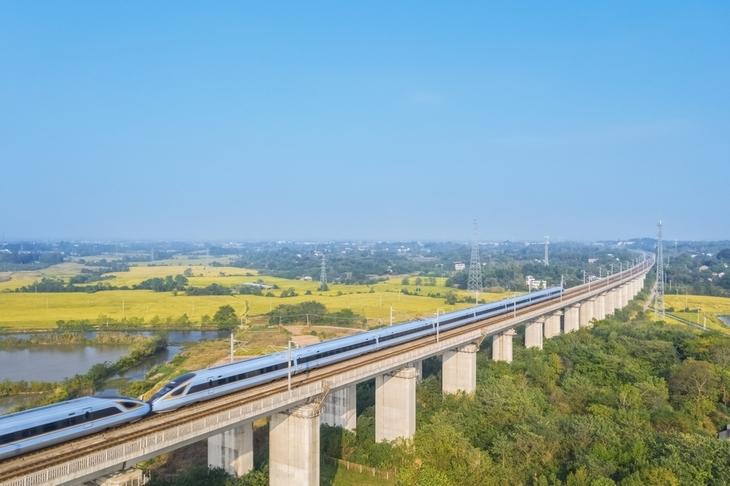
More than just infrastructure, the high-speed rail system is a symbol of China’s modern ambitions. It showcases the country’s ability to plan, invest, and execute on a massive scale, often completing projects in half the time it would take elsewhere. In cities with new stations, you’ll often find futuristic architecture, LED-lit platforms, and tech-enhanced ticketing systems designed to impress.
High-speed rails are increasingly integrating with other smart city innovations, such as facial recognition check-in, QR code boarding, and AI-based crowd control. These contribute to a seamless user experience and reflect China’s high-tech prowess.
Riding the rails and speaking the language
Riding high-speed rail in China is more than a way to get from A to B. It’s a gateway to understanding the country’s geography, culture, and language. It’s efficient, immersive, and inspiring.
So grab your phrase book, passport, and maybe a good thermos of jasmine tea. Adventure and Mandarin mastery await.
Related Reading: Mastering Mandarin Tones: Pronunciation Tips and Tricks from Fellow Learners
Turn memory into your Mandarin superpower
Chinese characters don’t have to be overwhelming. With the right method, they become memorable, logical — even fun. Skip the mindless repetition. Use radicals as clues, mnemonics for meaning, and spaced repetition to lock it all in.
Start small, stay consistent, and watch your skills grow. A few minutes a day adds up to real fluency.
Ready to make Mandarin stick? Join the Mandarin Blueprint Challenge, a free 30-day program packed with proven techniques, a full curriculum, and a supportive community. Thousands of characters? You’ve got this—one unforgettable story at a time.