
How to Use Hanzi to Memorise Chinese Characters
You’ve heard the rumors that learning Chinese characters is a memory marathon. Thousands of intricate symbols, each with its own meaning, pronunciation, and tone? Sounds like a recipe for mental overload.
But what if there was a method not just to survive this challenge but to thrive in it?
What if Hanzi (hànzì – 汉字) could become your brain’s favorite memory tool?
Chinese characters aren’t just linguistic units. They’re beautifully constructed memory anchors, mini-stories, visual puzzles, and mnemonic powerhouses all rolled into one. With the right strategies, memorizing thousands of them becomes not only achievable but surprisingly fun.
This is your guide on how to use Hanzi as a memory tool and finally conquer the Great Wall of Chinese literacy.
Hanzi: Memory tools hiding in plain sight
Let’s start with the basics. Hanzi aren’t random squiggles. They’re structured, meaningful, and often tell a visual or logical story. The key is learning to decode them like a seasoned sleuth.
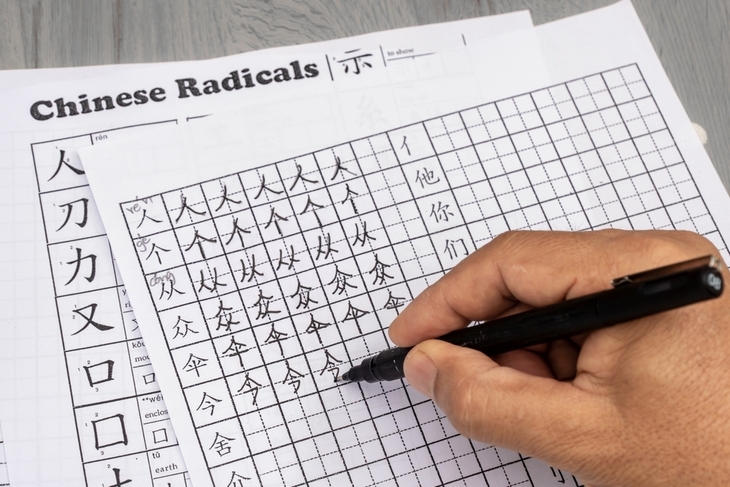
Each character is built from radicals (部首), which function like building blocks. Some indicate meaning (e.g., 水 for water-related ideas), while others hint at pronunciation.
Take the character 清 (qīng) for example. It’s made of 氵(water) and 青 (green/blue). The meaning relates to clarity and purity, which makes sense when you associate it with water and color.
Recognizing these internal structures transforms Hanzi from complex shapes into memorable, logical connections. It’s like solving a puzzle where every piece reveals more about how the language works.
Understanding radicals gives you a powerful edge. Once you master even a few, you’ll suddenly start spotting them everywhere. It’s like learning the hidden code of Chinese writing. Suddenly, characters that once seemed overwhelming begin to feel familiar.
Related Reading: Creative Ways to Immerse Yourself in Mandarin
A brief history
To truly appreciate Hanzi, it helps to understand where they came from and just how far they’ve come. Chinese characters trace their origins back over 3,000 years to the oracle bone script, a fascinating early form of writing carved into turtle shells and animal bones for divination purposes. These were not abstract letters but pictographs — literal, visual representations of real-world objects.
Take, for example, these characters:
- 日 = the sun
- 月 = the moon
- 木 = a tree
The character for “sun” was a circle with a dot in the middle, while “tree” was drawn with branching lines like a simplified sketch. As Chinese civilization grew more complex, so did its writing system. These pictographs gradually evolved into ideograms expressing ideas and concepts, eventually becoming compound characters that combined elements to suggest meaning or pronunciation.
The evolution of Hanzi went through many distinct phases, from bronze inscriptions to the more cursive seal script, to the more rectangular clerical script, and finally to the regular script still used today in both traditional and simplified forms. Simplified characters were introduced in the mid-20th century as part of literacy campaigns in mainland China, reducing the number of strokes in many complex characters to make reading and writing far more accessible.
When you study Hanzi, you’re not just memorizing symbols or learning how to write; you’re engaging with one of the oldest, most continuous writing systems in human history. Every character is a layered story, a trace of collective memory passed down through generations.
Hanzi is practical and poetic, grounding you in the language while opening a window into Chinese thought, aesthetics, and tradition.
Visual mnemonics: Paint a picture in your mind
Mnemonics are a powerhouse for memorization. But we’re not talking about boring acronyms. We’re talking vivid, funny, personal stories that etch characters into your memory.
This is the core of the Mandarin Blueprint Method, a memory palace approach where every character becomes a scene.
Imagine needing to memorize 马 (mǎ), meaning “horse.”
Picture Matt Damon (actor representing “m”) riding a horse through your mom’s kitchen (a set representing the “a” final). The horse knocks over spice jars and gallops past the fridge. Weird? Yes. Memorable? Absolutely.
The more vivid and emotional the story, the more firmly it lodges in your memory. Your brain is wired to retain stories, especially those filled with images, movement, and feelings. So don’t be afraid to get creative. Go wild with your mental movies.
The Mandarin Blueprint Method: Your Hanzi movie toolkit
The Mandarin Blueprint Method breaks characters into four elements: actor, set, props, and script.
Your actor represents the initial sound. The set represents the final sound, often tied to a familiar location. Props symbolize radicals or components of the character. And the script ties it all together with a bizarre, emotional, unforgettable story.
This is active recall on steroids. Your brain works harder to reconstruct the scene, which in turn strengthens memory pathways. It turns studying into a form of imaginative play. It’s a much more enjoyable and effective method than passive repetition.
Let’s say you’re learning the character 明 (míng), meaning “bright.” It combines 日 (sun) and 月 (moon). Your script might involve Marilyn Monroe (M sound) in your front yard (location for -ing) using a sun and moon as spotlight props while performing a late-night karaoke concert. Absurd? Yes. But you won’t forget it.
Related Reading: How to Stay Motivated and Conquer Mandarin Chinese (Like These 12 Learners Did)
Semantic + phonetic components
Many characters include a semantic component (hinting at meaning) and a phonetic component (hinting at pronunciation).
Take 妈 (mā) for example. It combines 女 (woman) and 马 (mǎ). The meaning (mother) makes sense with the female radical, and the pronunciation borrows from “ma.”
Learning to spot these patterns trains your brain to predict new characters, even before you formally study them. This is incredibly empowering. It helps build a sense of intuition that accelerates your ability to read and remember characters long-term.
Some more examples:
- 河 (hé) = 氵(water) + 可 (phonetic)
- 烧 (shāo) = 火 (fire) + 尧 (yáo)
With practice, you’ll begin to see these combinations everywhere, and they’ll give you useful clues in both sound and meaning.
Emotions as the secret sauce
Memory thrives on emotion. You remember your most embarrassing moment, but not what you ate last Tuesday, right?
So, create scenes that are funny, sad, terrifying, or weird. The stronger the emotional imprint, the stronger the recall.
For 喜 (xǐ, happy), imagine yourself winning the lottery and dancing in the streets. For 怒 (nù, angry), picture an angry car hissing and knocking things off a shelf.
Adding emotional layers also makes reviewing your stories more engaging. You’re not just looking at characters. You’re reliving tiny emotional dramas that you created. This builds stronger connections and longer-lasting recall.
Spaced repetition + storytelling
Apps like Anki or Skritter use spaced repetition to show you characters just before you forget them. But don’t rely solely on repetition.
Instead, tie each review to the story you created. That mental image brings the character back with context, sound, and meaning all at once.
Spaced repetition is the “when.” Your stories are the “why.”
Reviewing a card that simply says 明 isn’t nearly as powerful as recalling your full karaoke scene with sun and moon spotlights. You’re not just memorizing a symbol. You’re engaging with a memory that has shape, structure, and soul.
Avoid these common pitfalls
Don’t fall into the trap of rote memorization. Writing the same character 50 times might help temporarily, but without understanding its structure and meaning, it won’t stick.
Don’t ignore phonetic components. They’re shortcuts to pronunciation.
And don’t treat flashcards like checkboxes. Make each review count by bringing your memory scene back to life. Avoid trying to learn too many new characters at once. Focus on quality over quantity. It’s better to deeply remember 10 characters than to vaguely recognize 50.
Also, beware of burnout. It’s easy to get overwhelmed by the scale of the task. Instead of focusing on the thousands you haven’t learned, focus on the progress you’ve already made. Building momentum is more important than perfection.
Learn like an adult, not a child
Chinese children spend years learning characters with constant handwriting drills. But as an adult, you can be smarter about it. You have better logic, abstract thinking, and storytelling skills. Use those to your advantage. Instead of copying how kids learn, use tools that align with your brain’s learning style. Create patterns, build stories, use tech. Hack your memory.
Don’t forget that your goals might differ from those of a child. You might be learning Chinese for travel, business, or connection with family. Tailor your character learning to your real-life needs and motivations. Take control of your curriculum—prioritize high-frequency characters. Focus on vocabulary relevant to your goals. Learn phrases that include the characters you’re memorizing.
Related Reading: Complete Guide to Gamified Language Learning
Activate Hanzi in the real world
Characters become unforgettable when you use them in real life. Read graded readers—label objects in your home. Join Mandarin chats. Listen to podcasts. Watch dramas with subtitles. Look for characters in your environment on restaurant menus, packaging, signage, and digital media.
The moment you recognize 便宜 (piányi, cheap) on a price tag or 茶 (chá, tea) on a menu, you lock it in for good. Even better, try writing your own sentences using newly learned characters. Keep a simple daily journal in Mandarin. The act of producing language helps reinforce everything you’ve learned.
Remember to speak aloud. Say the characters, say the words, say the sentences. Language learning is not just visual — it’s physical. Involving multiple senses boosts retention dramatically.
Supercharge with the right tools
Your toolkit matters. Try apps like:
- Skritter for character writing and spaced reviews
- Pleco for dictionary lookup
- Zizzle for animated character stories
- Anki for custom flashcard decks
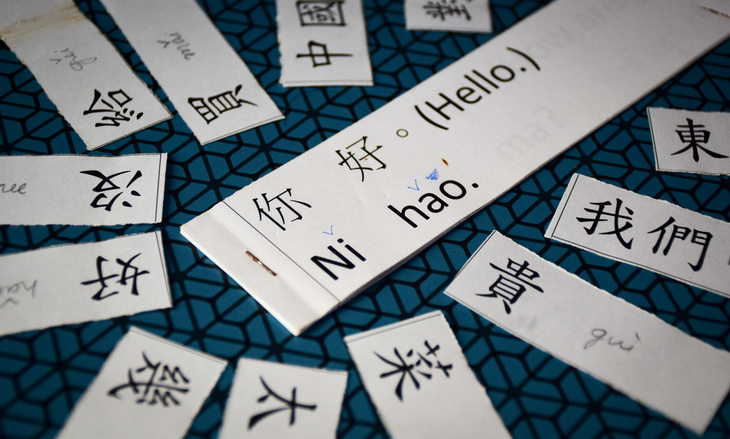
Print out radical charts, use sticky notes, make posters, and create your own mnemonic flashcards with hand-drawn characters and stories. Combine these tools with consistency. Ten minutes a day using smart methods can beat an hour of unstructured cramming. Track your sessions, set reminders, and celebrate streaks.
Join online communities, too. Engage with other learners. Share your favorite mnemonics. Ask for help when stuck. Teaching others what you’ve learned reinforces your own knowledge.
Track your progress and celebrate wins
Keep a log of what you’ve learned. Count how many characters you can recognize. Test your writing memory. See how many you can use in a sentence. Celebrate small wins like reading your first graded story or recognizing a character on a street sign. Remember that progress is motivation. Every character you learn is another door opened to understanding culture, people, and new experiences.
Consider setting milestone goals. For example, learn your first 300 characters, which cover the majority of common Chinese usage. From there, the next 700 characters unlock even more content. Each milestone brings new rewards like reading fluency, more understanding, and increased confidence.
Turn memory into your Mandarin superpower
Chinese characters don’t have to be overwhelming. With the right approach, they become delightful, logical, and deeply memorable. Forget grinding and repetition. Use radical clues, emotional mnemonics, and spaced repetition to turn every Hanzi into a mental snapshot.
Start small, build momentum, and keep it fun. Consistency bears intensity. And the payoff, being able to read, write, and communicate in one of the world’s most spoken languages, is worth every effort.
Ready to take your memory to the next level? Join the Mandarin Blueprint challenge, a free 30-day program that walks you through this exact process. You’ll gain lifetime access to the curriculum, memory-building techniques, and a thriving community.
Thousands of characters? You’ve got this — one unforgettable story at a time.