Ordering Coffee and Other Café Drinks in Mandarin

For generations, China’s been the undisputed champion of tea. But hold on to your hats (or should we say, teacup lids?) because a new contender has entered the ring, wafting its rich aroma through the bustling cities: coffee! Now, compared to tea’s millennia-long reign, Chinese coffee culture is still the new kid on the block. Yet, its rise has been faster than you can say “double espresso,” morphing from a quirky treat to a legit part of modern Chinese life.
This isn’t just about knowing that coffee shops in China exist. We’ll be exploring its surprisingly interesting backstory, how it’s evolved, the trends that are making it the “it” drink, and why it’s become more than just a caffeine fix. Plus, we’ll arm you with the Mandarin phrases you need to confidently order all sorts of drinks Mandarin style, so you can walk into any Chinese coffee shop and sound like you know your flat white from your… well, another type of flat white (it can get confusing!). Get ready to not just appreciate, but actively participate in, China’s exciting coffee revolution!
China’s coffee origin story (from French fancies to Yunnan gold)

So, how did China, a land practically synonymous with tea, become a place where a decent latte lurks around every corner? Well, in the late 1800s, some pioneering French folks figured Yunnan looked just right for those curious “coffee” plants. They were the OG coffee dreamers, planting the seeds of today’s booming Chinese coffee culture.
Simultaneously, a French missionary was also spreading the caffeinated gospel in southern Yunnan — talk about early baristas (minus the oat milk options!). There’s even a historical whisper of the Dutch trying to introduce coffee back in the 16th century, but that initial brew just didn’t quite get the nation buzzing.
The ’88 awakening of government and global intervention
Fast forward to 1988, and things finally started to heat up! The Chinese government had a lightbulb moment and launched a project to give the domestic coffee industry a much-needed jolt. This was like adding a shot of espresso to the whole situation! Crucially, this initiative attracted the attention of big international players, most notably Nestlé, who swooped in. This collaboration led to a significant jump in coffee production.
Yunnan: China’s Caffeinated Heartland
Today, Yunnan reigns supreme as China’s coffee king, producing a staggering 95% of the nation’s beans. They’re mostly growing those prized Arabica varieties that even coffee aficionados rave about. Yunnan’s mountainous terrain, climbing to around 2,000 meters, paired with its mild climate, offers a five-star experience for coffee plants. This natural advantage makes Yunnan a key player in the domestic and global specialty Chinese coffee culture market. Who knew those early French attempts would blossom into such a booming business?
Political brew (ideology and coffee culture)
You can’t discuss Chinese coffee culture without a nod to history. In the early People’s Republic, coffee was eyed with suspicion as “bourgeois luxury” (tea was the comrade’s choice!). The Cultural Revolution saw coffee shops in China and imports banned — tough times for cappuccino cravings! However, as China opened up, attitudes softened. While no daily latte mandate exists, echoes of the past linger in the communal feel of some Chinese coffee shop spaces and their ownership structures.
Related Reading: The Complete Guide to Chinese Tea
From swanky sips to everyday ritual (the latte-fication of China)
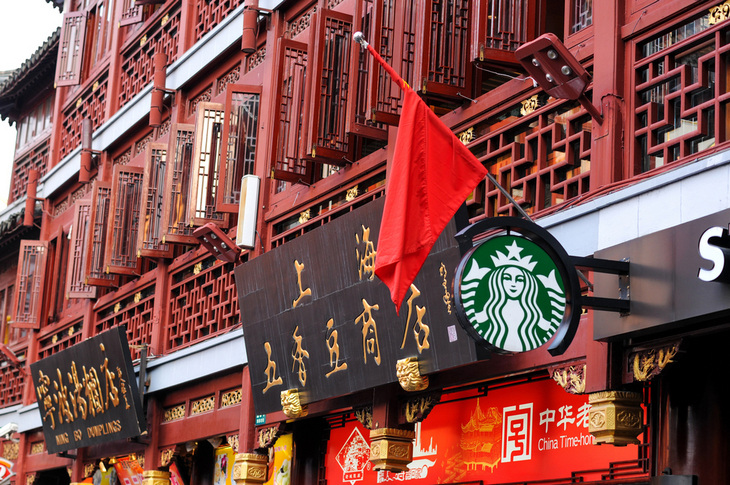
Initially, Chinese coffee culture had a strong Western influence. Suddenly, a takeaway cup became a statement, a delicious badge of social status. For many, especially early on, international coffee shops in China weren’t just about the drinks; they symbolized urban modernity and that “authentic” Western coffee experience. Blame it on travel and glamorous TV — younger generations embraced coffee as the cool, sophisticated kid, perfect for saying, “I’m modern, worldly… and need caffeine.” Plus, let’s be real, a good latte looks great on the ‘gram — sometimes the aesthetic was almost as important as the buzz!
The big players enter the game
International chains like Starbucks, Coffee Bean & Tea Leaf, and Costa Coffee definitely paved the way for China’s coffee craze. Starbucks, the undisputed king, still holds a massive market share. Their ’99 arrival was a pivotal moment, sparking a nationwide caffeine surge. And they’re not stopping, with plans for thousands more stores and a new store opening every 15 hours — ensuring a Frappuccino is never too far away!
The rise of homegrown coffee stars
But it’s not just the international giants! Cool, local Chinese coffee shop brands like Manner, Seesaw, and M Stand have emerged, gaining loyal fans with quality and unique vibes. Manner, starting small in Shanghai, quickly won over young urbanites with its chic minimalism and ethical beans. Then came Luckin Coffee, the disruptor, rapidly expanding with discounts and a delivery focus to rival Starbucks. And let’s not forget Seesaw Coffee, a champion of China’s specialty coffee scene, sourcing great beans and even blending local flavors.
Tea vs. coffee (a brewing rivalry)
anywhere — it’s in the national DNA! But, younger generations are definitely adding coffee to their drinks menu as a trendy social option. This has led to modern coffee shops in China offering comfy, contemporary spaces with Wi-Fi and charging — perfect for the modern social animal. The growth of Chinese coffee culture shows how globalization and changing tastes can reshape traditions, with coffee carving out its own space alongside China’s beloved tea.
Related Reading: Drink like a Local — A Guide to Alcohol in China
What’s brewing now? The hottest trends in Chinese coffee culture
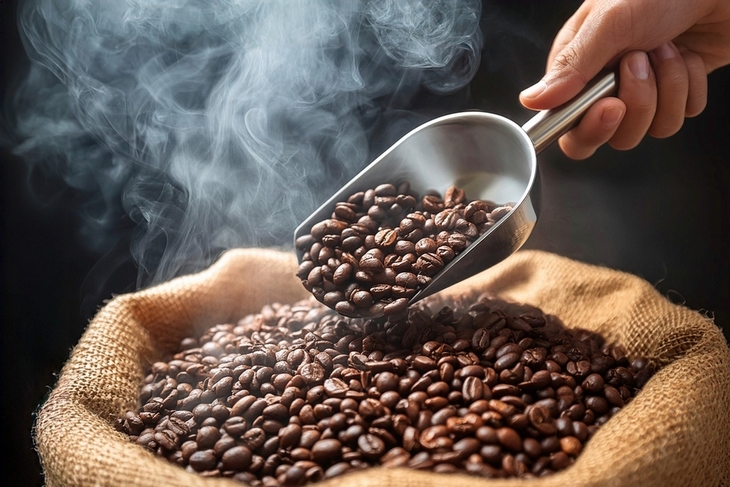
The Chinese coffee culture market is exploding! It’s one of the fastest-growing globally, with average annual growth of around 12% since 2010, hitting 30% in some years. In 2021, it jumped 31%. Experts predict a continued 9.63% annual growth (2022-2025). By the end of 2025, China is projected to consume 6.3 million bags of coffee, becoming the world’s sixth-largest consumer. That’s a significant surge!
Beyond the big smoke, coffee spreads to the smaller cities
This coffee revolution isn’t just in Shanghai and Beijing. Chinese coffee shops are popping up in smaller cities thanks to chain expansions. Enjoying a latte is becoming an everyday option for more people. As those smaller cities develop and incomes rise, so does the demand for modern lifestyle perks like trendy cafés — a big opportunity for nationwide coffee brands.
Wacky and wonderful local coffee creations
Chinese coffee culture loves to experiment with unique, localized creations. These innovative drinks blend tradition with coffee, giving us delights like Red Bean, Cheese, Osmanthus, and Brown Sugar Lattes. But some cafés go wild: Oyster Coffee, Diet Coke & Cilantro Coffee (yikes!), and Chili Pepper Coffee. A fave is “dirty” coffee (陨石 – yǔnshí) — a trendy layered drink where hot espresso is poured over cold milk for a striking look and contrasting taste. This trend shows China’s coffee scene is dynamic, adaptable, and not afraid to get wonderfully weird!
Tap in, tune in, caffeine out
You can’t discuss coffee in China without noting the dominance of digital ordering and delivery. For most Chinese consumers, their phones are like a third hand, making them super keen on coffee delivery apps. Luckin Coffee practically built its empire on its user-friendly app. Even giants like Starbucks have partnered with local delivery services like Meituan. Now, pretty much every Chinese coffee shop offers delivery via apps, catering to the demand for instant caffeine.
Related Reading: Complete Guide to Gamified Language Learning
Your Mandarin survival guide for ordering coffee

Walking into a bustling Chinese coffee shop and knowing what to say can feel daunting. Well, consider this your essential guide to ordering drinks Mandarin style, ensuring you get exactly what your heart (and caffeine cravings) desire. Let’s get into some key phrases to have you ordering like a local in no time.
The polite pleasantries and setting the stage for smooth ordering
Before you even think about that double espresso, a little politeness goes a long way. Here are your basic Mandarin social superpowers:
| English | Mandarin (Simplified) | Pinyin | Notes |
| Hello | 你好 | Nǐ hǎo | Your go-to greeting. |
| Thank you | 谢谢 | Xièxiè | Essential for showing appreciation. |
| You’re welcome | 不客气 | Bú kèqì | Your polite response. |
| Please | 请 | Qǐng | Sprinkle this around for extra politeness. |
| Waiter/waitress | 服务员 | Fúwùyuán | Your friendly call for assistance. |
Ready to order your coffee?
Now for the main event — telling them what you want! Here are a few ways to kick off your order:
| English | Mandarin (Simplified) | Pinyin | Notes |
| I want / I’d like | 我要 | Wǒ yào | A straightforward way to order. |
| I would like | 我想要 | Wǒ xiǎng yào | Slightly more formal than 我要. |
| Give me a cup of | 给我来一杯 | Gěi wǒ lái yībēi | A casual way to order a drink. |
| Please give me | 请给我 | Qǐng gěi wǒ | A polite way to request something. |
| Menu | 菜单 | Càidān | The key to unlocking your caffeinated desires. |
| Please give me the menu | 请给我菜单 | Qǐng gěi wǒ càidān | For when you want to peruse your options. |
When you need a little guidance in a Chinese cafe
Not sure what to try? Don’t be afraid to ask the experts!
| English | Mandarin (Simplified) | Pinyin | Notes |
| What’s your recommendation? | 你有什么推荐? | Nǐ yǒu shénme tuījiàn? | A direct way to ask for their top pick. |
| What’s the most popular drink? | 这里最火的喝的是什么? | Zhè lǐ zuì huǒ de hē de shì shénme? | Adapting the “most popular dish” phrase for drinks. |
| Got any special recommendations? | 有什么特别推荐吗? | Yǒu shénme tèbié tuījiàn ma? | For when you’re feeling a little adventurous. |
Counting cups and specifying quantity
Whether you need one shot or a whole round for your friends, here’s how to specify the amount:
| English | Mandarin (Simplified) | Pinyin | Notes |
| One | 一 | Yī | The loneliest number (unless it’s a great coffee). |
| Two (items) | 两 | Liǎng | Remember to use 两 for counting items. |
| Cup (measure word) | 杯 | Bēi | The standard measure for most drinks. |
| General measure word | 个 | Gè | When in doubt, 个 will usually do the trick. |
| Bottle | 瓶 | Píng | For those grab-and-go bottled delights. |
(We’ll skip listing all numbers 3-10 here to keep it concise, but definitely brush up on Chinese numbers!)
Here or to go? The great takeaway debate
Let them know your plans — are you settling in or hitting the road?
| English | Mandarin (Simplified) | Pinyin |
| For here | 在这儿喝 | Zài zhèr hē |
| To go | 打包 | Dǎbāo |
| To go | 带走 | Dàizǒu |
Asking for the bill in a Chinese coffee shop
The moment of truth (and transaction)!
| English | Mandarin (Simplified) | Pinyin | Notes |
| Check, please | 买单 | Mǎidān | A common way to ask for the bill. |
| Check, please | 结账 | Jiézhàng | Another standard way to request the bill. |
| Please settle the bill | 麻烦结下账 | Máfan jié xià zhàng | A polite way to ask for the bill. |
Enjoying your brew and expressing delight
Let them know if they’ve hit the spot with your drinks order!
| English | Mandarin (Simplified) | Pinyin | Notes |
| Delicious (for drinks) | 好喝 | Hǎohē | Your go-to for a tasty beverage. |
| It’s really delicious (drinks) | 太好喝了 | Tài hǎohē le | When you’re seriously impressed. |
| Very delicious (drinks) | 很好喝 | Hěn hǎohē | Another way to express your enjoyment. |
| Delicious (general food) | 好吃 | Hǎochī | For those tempting pastries on display. |
Your Mandarin coffee dictionary (coffee names and customizations)
Now for the nitty-gritty — knowing the names of your favorite coffee in Mandarin and how to customize them like a pro!
| English Name | Mandarin Name (Simplified Chinese) | Pinyin | Notes |
| Latte | 拿铁 | nátiě | Loanword; very popular, favored by young urbanites, common on social media. |
| Cappuccino | 卡布奇诺 | kǎbùqínuò | Loanword, often shortened to 卡布 (kǎbù). |
| Americano | 美式咖啡 | měishì kāfēi | Literally “American style coffee,” popular for business meetings. |
| Espresso | 浓缩咖啡 | nóngsuō kāfēi | Literally “concentrated coffee,” base for many drinks. 浓缩 (nóngsuō) can be used alone. |
| Mocha | 摩卡 | mōkǎ | Phonetic translation, espresso with steamed milk and chocolate. |
| Flat White | 澳白 | ào bái | Literally “Australian white,” also 澳式白 (àoshìbái). Starbucks: 馥芮白 (fù ruì bái), Luckin: 澳瑞白 (ào ruì bái). |
| Macchiato | 玛奇朵 | mǎ qí duǒ | Loanword. |
| Cold Brew | 冷萃咖啡 | lěng cuì kāfēi | Trending among young professionals, popular in summer. |
| Brown Sugar Latte | 黑糖拿铁 | hēi táng ná tiě | Fusion of traditional Asian flavors, popular on social media. |
| Cheese Coffee | 芝士咖啡 | zhī shì kā fēi | Local adaptation, trending among young consumers. |
| Red Bean Coffee | 红豆咖啡 | hóng dòu kā fēi | Traditional Chinese ingredient meets coffee. |
| Dirty Coffee | 陨石 | yǔnshí | A relatively new trend in China. |
| Cortado | 科尔塔多 | kē’ěrtǎduō | Loanword. |
| Dairy Milk | 牛奶 | niúnǎi | Can also be shortened to just 奶 (nǎi). |
| Oat Milk | 燕麦奶 | yàn mài nǎi | A popular non-dairy alternative. |
| Soy Milk | 豆奶 / 豆浆 | dòunǎi / dòujiāng | Note that 豆浆 (dòujiāng) is often used for traditional Chinese breakfast soy milk. |
| Almond Milk | 杏仁奶 | xìng rén nǎi | Be careful not to confuse with 杏仁茶 (xìng rén chá) – almond tea. |
| Add Sugar | 加糖 | Jiā táng | For those with a sweet tooth. |
| No Sugar/Sugar-Free | 不要糖 / 无糖 | Bú yào táng / Wú táng | For those watching their sugar intake. |
| Less Sugar | 少糖 | Shǎo táng | A common request. |
| Half Sugar | 半糖 | Bàn táng | For a moderate sweetness level. |
| Little Sugar | 微糖 | Wēi táng | For just a hint of sweetness. |
| Extra Sugar | 多糖 / 全糖 | Duō táng / Quán táng | For the ultimate sugar rush. |
| Extra Shot | 加浓 | Jiā nóng | For that extra caffeine kick. |
| Whipped Cream | 鲜奶油 | Xiān nǎiyóu | For a little extra indulgence. |
| Hot | 热的 | Rè de | For a warm and comforting beverage. |
| Iced / Cold | 冰的 / 冷的 | Bīng de / Lěng de | For a refreshing treat. |
| No Ice | 去冰 | Qù bīng | For those who prefer their drinks without the chill. |
| Less Ice | 少冰 | Shǎo bīng | A happy medium for those who like a little coolness. |
| Add Ice | 加冰 | Jiā bīng | If they forgot the ice (it happens!). |
With this linguistic toolkit in hand, you’re now ready to confidently stride into any Chinese coffee shop, order your favorite drinks Mandarin style, and maybe even impress the locals with your newfound language skills! 加油 (Jiāyóu) — You got this!
Related Reading: Can You Learn a Language in Your Spare Time? Yes, and Here’s How!
Your passport to China’s coffee scene (and beyond!)
Feeling ready to ditch the awkward pointing and finally order that perfect 黑糖拿铁 like a true local? Imagine effortlessly striking up conversations, understanding locals, and truly immersing yourself in the richness of Chinese culture. The same drive that fueled your curiosity about China’s coffee revolution can propel you toward a deeper connection with the language itself.
Ready to go beyond the bean and unlock the basics of Mandarin in just 30 days — absolutely FREE? Join The Mandarin Blueprint Challenge today and snag lifetime access to our revolutionary curriculum and a supportive community of over 1,600 fellow language learners!
This isn’t about simply memorizing phrases, it’s about understanding the building blocks of the language in a way that actually makes sense.
Register now, and you’ll get course materials and bonuses worth a staggering $1,996! Consider it your all-access pass to not just ordering coffee but truly experiencing China. Join the challenge today and let your Mandarin adventure begin — the perfect blend of coffee and adventure awaits!