What Are Radicals in the Chinese Language?
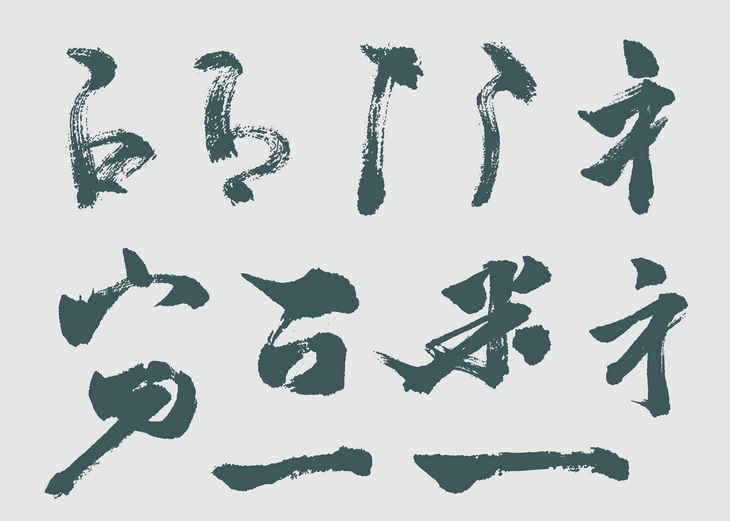
You know that feeling when you first clap eyes on a page of Chinese characters? It’s like someone spilled a thousand intricate ink blots that somehow convey profound meaning. It’s enough to make you want to throw your hands up and declare, “Nope! I’m off to learn interpretive dance!”
But hold your horses (or should I say, 别跑! bié pǎo!). Because lurking within these seemingly chaotic creations are tiny, mighty heroes: Chinese radicals.
Think of learning Chinese characters without understanding Chinese radicals as trying to assemble a super-complex Lego castle while blindfolded and with mittens on. You might eventually get something vaguely castle-shaped, but it’ll probably be structurally unsound and missing a few crucial turrets.
These radicals are the individual Lego bricks, the fundamental components that make up almost every single Chinese character out there. They’re the secret sauce, the hidden code, the… well, you get the idea.
Let’s explore the wacky and wonderful world of radicals and Chinese characters. By the end of this guide, you’ll know what these fundamental building blocks are and appreciate their crucial role.
The radical truth (defining Chinese radicals)
So, what exactly is a Chinese radical? In the simplest terms, think of them as the core components, the building blocks that pop up again and again within different Chinese characters. Officially, they’re known as 部首 (bùshǒu), which literally translates to “head part” or “section header.” They’re little signposts within a character, often hinting at its meaning or, less reliably, its pronunciation.
Now, these aren’t some modern invention. Chinese radicals have a rich history, stretching back to the earliest forms of Chinese writing. Many of them started out as actual pictures (pictograms) representing tangible objects like the sun (日 rì), the moon (月 yuè), or a person (人 rén).
Over centuries, these little doodles evolved into the more stylized forms we see today, sometimes losing their obvious pictorial connection but retaining a core meaning.
Now, a radical can play two main roles within a character. Sometimes, it’s all about the meaning, like the “water” radical (水 shuǐ) popping up in words for rivers (河 hé) and oceans (海 hǎi). Other times, it might contribute more to the character’s sound, although this is notoriously unreliable and often leads to delightful pronunciation-based misunderstandings.
So, in a nutshell, Chinese radicals are the fundamental, recurring components of Chinese characters. They often hint at meaning and serve as crucial organizational tools in written Chinese.
Related Reading: The Mandarin Blueprint Guide to Chinese Homonyms and Homophones
The grand list of Chinese radicals (and why you shouldn’t try to memorize them all at once)
So, you’re probably thinking, “Okay, these Chinese radicals sound important. Where can I find a list of them?” Well, traditionally, the go-to source has been the venerable Kangxi Dictionary (康熙字典 Kāngxī Zìdiǎn), an 18th-century behemoth that meticulously cataloged Chinese characters under 214 distinct radicals.
Now, fast forward to the present day, and with the simplification of Chinese characters in mainland China, the official count of commonly used radicals has been slightly streamlined to around 201. Different dictionaries and resources might have slightly varying lists, but the core set remains largely consistent.
At this point, you might feel a sudden urge to print out a massive list of Chinese radicals and start drilling yourself like you’re preparing for the linguistic Olympics. Resist that urge! While a comprehensive list exists, the key to unlocking the power of radicals isn’t necessarily about rote memorization of every single one. That’s like trying to memorize every single type of Lego brick ever made before you even start building anything. Overwhelming and, frankly, a bit unnecessary.
Instead, the smart approach is to focus on recognizing the common and high-frequency radicals, the workhorse 部首 that appear in a multitude of characters.
Let’s peek at a few of these superstar radicals and their typical meanings to give you a taste:
- 水 (shuǐ — water): Often found in characters related to liquids, like 河 (hé — river) and 湖 (hú — lake). Imagine it as the “wet stuff” category.
- 木 (mù — wood): Frequently appears in characters for trees, plants, and wooden objects, such as 树 (shù — tree) and 桌 (zhuō — table).
- 人 (rén — person): Shows up in characters dealing with people or human actions, like 你 (nǐ — you) and 们 (men — plural suffix for people). It’s the “me, you, and everyone else” radical.
- 女 (nǚ — woman): Often features in characters related to females, like 妈 (mā — mother) and 姐 (jiě — older sister).
- 口 (kǒu — mouth): Appears in characters related to speaking, eating, or openings, such as 吃 (chī — to eat) and 问 (wèn — to ask).
You can hopefully already see how these tiny components carry significant semantic weight. Remember, the goal isn’t to become a walking, talking list of Chinese radicals but rather to develop an eye for these recurring patterns and understand their general meanings. As you encounter more characters, these radical regulars will start popping up like familiar faces in a crowded room. And instead of feeling overwhelmed, you’ll start to feel like you’re finally in on the secret!
Related Reading: Complete Guide to Gamified Language Learning
Radicals in Mandarin (are more than just pretty pictures)
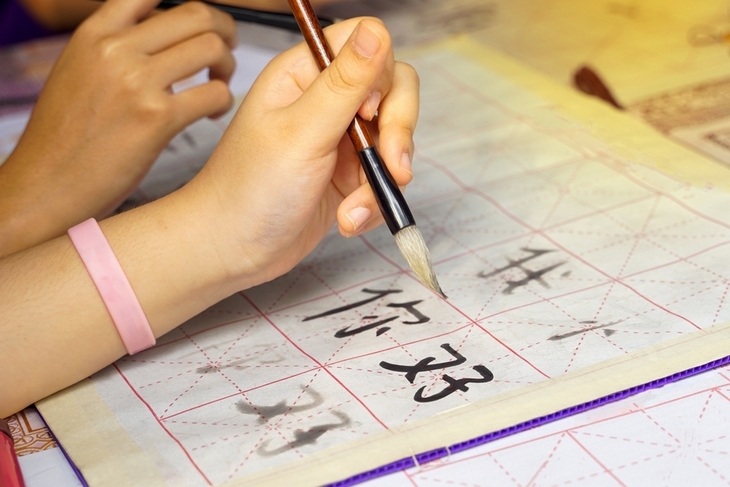
The beauty of Chinese radicals lies not just in their historical origins but in their multifaceted functions within the written language. They’re like Swiss Army knives, each component serving a distinct (and sometimes surprisingly unrelated) purpose.
Firstly, and perhaps most intuitively, many radicals act as semantic clues. They often provide a general category of meaning for the character they reside in. We saw this earlier with the “water” radical (水 shuǐ) tending to hang out in words related to all things aqueous.
Think of it as the radical whispering, “Hey, this character is probably about something wet!” Similarly, characters featuring the “grass” radical (艹 cǎo) often relate to plants or vegetation, like 花 (huā — flower) and 草 (cǎo — grass).
Secondly, radicals serve as crucial organizational tools. Remember that massive Kangxi Dictionary we talked about? Well, it (and most modern Chinese dictionaries) organizes its thousands upon thousands of characters precisely by radical. It’s like the Dewey Decimal system for Chinese characters. If you know the radical of a character, you have a fighting chance of looking it up, even if you have absolutely no idea how to pronounce it. Imagine trying to find a specific book in a library where the books were just thrown onto shelves willy-nilly. Utter chaos! Radicals bring order to this potential pandemonium.
Thirdly, radicals can be incredibly helpful in distinguishing similar characters. Chinese characters are notorious for looking maddeningly alike, differing by just a stroke or two. Often, it’s the radical that holds the key to unlocking the different meanings.
Take, for example, the characters 士 (shì — scholar, soldier) and 土 (tǔ — earth, soil). They look incredibly similar, but one has a longer top stroke, and they belong to different radical categories. Mixing these up could lead to some rather… earthy misunderstandings in conversation. It’s like telling someone you’re a “soil-dier” instead of a “soldier.” Definitely a conversation starter, but probably not in the way you intended.
Now, it’s important to acknowledge that the relationship between a radical and a character’s meaning isn’t always crystal clear. Over centuries of linguistic evolution, some radicals have become more about historical classification than obvious semantic links. You might encounter a character where the radical seems to have absolutely nothing to do with its modern meaning. These are the radical rebels, the quirky outliers that keep things interesting (and occasionally frustrating).
Despite these occasional oddballs, understanding the primary roles of radicals of Chinese characters as semantic guides and organizational tools is a massive leap forward in your Chinese learning journey. They provide a framework, a logic, a way to make sense of what can initially seem like an impenetrable wall of squiggles.
So, embrace the radicals, appreciate their diverse roles, and let them be your trusty guides in the fascinating world of Chinese characters!
Related Reading: How to Argue like a Local in China (And Maybe Even Win a Few Arguments)
Practical tips for identification and understanding Chinese radicals
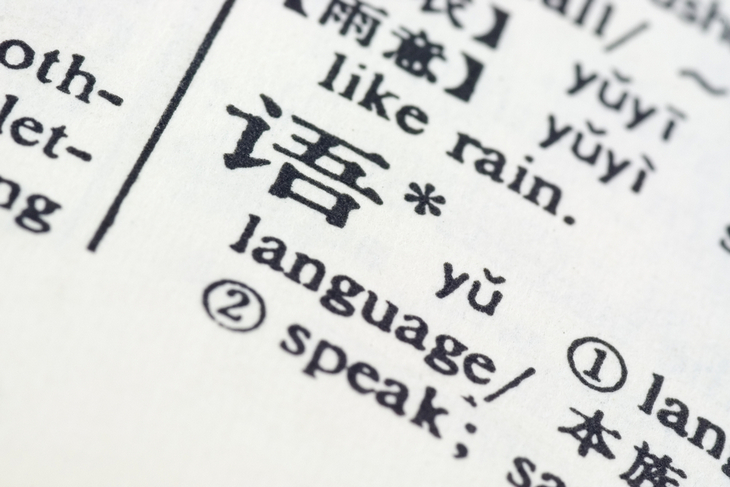
So, you’re staring at a Chinese character. It’s a beautiful, intricate piece of calligraphy, but somewhere within it lurks a radical. How do you find it? Well, unlike a hidden Easter egg, radicals tend to have preferred hangout spots within a character. While there aren’t hard and fast rules, they often reside in the following positions:
- The left side: This is a very common location. Think of radicals like 女 (nǚ — woman) in 好 (hǎo — good) or 木 (mù — wood) in 树 (shù — tree). They often stand proudly on the left.
- The right side: Radicals can also set up shop on the right, like 力 (lì — power) in 男 (nán — male).
- The top: Perched at the summit of a character is another frequent radical residence. Consider 草 (cǎo — grass) in 花 (huā — flower) or 宀 (mián — roof) in 家 (jiā — home).
- The bottom: Less common but still present, radicals can anchor a character from below, such as 心 (xīn — heart) in 想 (xiǎng — to think).
- Enclosing: Sometimes, a radical acts like a container, wrapping around other strokes. Think of 口 (kǒu — mouth) in 围 (wéi — to surround) or 门 (mén — door) in 问 (wèn — to ask).
- Within: Occasionally, a radical might be nestled inside other components, like 木 (mù — wood) in 東 (dōng — east).
The trick is to train your eye to look for these common placements. Don’t be discouraged if it’s not immediately obvious; like spotting familiar faces in a crowd, it gets easier with practice.
Here are some actionable tips to help you find your radical groove:
- Focus on the familiar: Start by actively trying to identify the common radicals we discussed earlier (水, 木, 人, 女, 口, etc.) in new characters you encounter. The more you recognize these, the easier it will be to break down more complex characters.
- Use online dictionaries: Many online Chinese dictionaries allow you to search for characters by radical. If you can identify a potential radical, you can use this feature to narrow your search and confirm if you’re on the right track.
- Don’t overthink it: Sometimes, a character might seem to have multiple components that could be radicals. In these cases, there’s often a conventional “head radical” under which the character is traditionally listed. Don’t get bogged down trying to analyze every single stroke initially. Focus on the most prominent or semantically relevant part.
- Embrace the learning curve: You won’t become a radical-identifying hero overnight. It takes time, exposure, and immersion. Be patient with yourself, and celebrate the small victories when you correctly identify a radical.
Don’t be disheartened if you occasionally misidentify a radical or if a character seems to defy all logical radical placement rules. Chinese characters have evolved over millennia, and sometimes their structure reflects historical quirks rather than perfect logical consistency.
With a little practice and a keen eye, you’ll start to see the underlying structure of Chinese characters through the lens of their radicals. It’s like suddenly being able to see the matrix!
Related Reading: Mastering Mandarin Tones: Pronunciation Tips and Tricks from Fellow Learners
Conquer characters, command radicals, commence your Mandarin mastery!
You now know that Chinese radicals aren’t just random strokes; they’re the very DNA of Chinese characters, providing vital clues to meaning and serving as the organizational backbone of dictionaries. While the initial encounter with a list of Chinese radicals might seem daunting, remember that focusing on the common ones and understanding their roles is the key to unlocking a deeper appreciation for the radicals of Chinese characters.
Does the idea of effortlessly learning those once-perplexing characters now spark your interest? Imagine confidently deciphering menus, understanding song lyrics, and connecting with a vibrant global community.
Well, hesitate no more! For a limited time, you can ignite your Mandarin journey without spending a single penny. We’re thrilled to announce The Mandarin Blueprint Challenge! By joining this immersive program, you’ll gain lifetime access to our comprehensive curriculum and become part of a thriving community of over 1,600 fellow Mandarin enthusiasts.
This isn’t a fleeting free trial; it’s a genuine opportunity to lay a rock-solid foundation in the basics of Chinese within just 30 days. Don’t let this incredible chance slip through your fingers. Act now and register today to receive the full course materials and exclusive bonuses valued at a staggering $1,996, all absolutely free!
Click the button below and start your Mandarin adventure with The Mandarin Blueprint Challenge. Your future self, fluent and confident, will thank you!