
Cognitive Load Theory and Chinese Learning: How MB Reduces Overwhelm

Remember that glorious, slightly terrifying moment you decided to learn Chinese? Then came the reality. You looked at your 100th character, and your brain began to perform a complex, internal rendition of a cat trying to herd startled hamsters. Congratulations! You’re experiencing Cognitive Overload, the arch-nemesis of effective language learning.
You’re not alone, and no, you’re not secretly bad at languages. Often, the problem isn’t you; it’s the method.
So, what if there was a scientific way to understand why your brain feels like scrambled eggs? Enter cognitive load theory (CLT), the brain’s instruction manual. This evidence-based framework explains how our working memory (our mental workbench) processes new information. And guess what? That workbench has very, very limited space.
In this guide, we’ll reveal why Chinese learning is particularly prone to triggering this dreaded brain fog, and most importantly, reveal how Mandarin Blueprint has engineered an entire system to drastically reduce this overwhelm. Get ready to stop fighting your brain and teach it how to learn smarter, not just harder.
What Is Cognitive Load Theory?
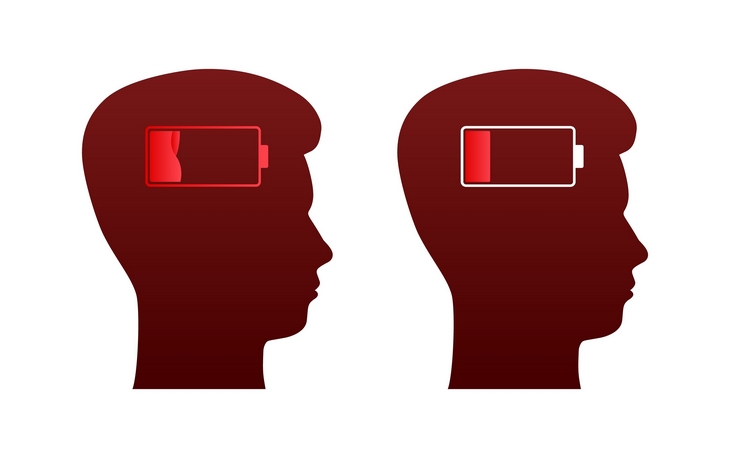
Cognitive load theory (CLT) isn’t some new-age guru mumbo jumbo, nor is it a secret handshake among brain surgeons. It’s a rock-solid, evidence-based framework from educational psychology that explains why some learning feels like sprinting uphill through treacle and why some feels surprisingly smooth.
At its heart, CLT is all about your working memory. Think of your working memory as a tiny, highly efficient (but very, very small) mental workbench. It’s where your brain actively processes information right now. It can hold a few pieces of information, juggle them around, and try to make sense of them.
But just like trying to assemble IKEA furniture on a wobbly coffee table, if you pile too much on, things get messy, fall off, and suddenly you’re just staring at a pile of indistinguishable wood and screws.
When that workbench gets swamped, that’s your brain hitting cognitive overload. It’s like trying to download the entire internet onto a floppy disk from 1998. Everything grinds to a halt, frustration mounts, and your brain screams, “TOO MUCH INFORMATION! ABORT! ABORT!”
Now, CLT identifies three distinct types of “load” that pile onto our precious workbench. Understanding these is key to smarter learning.
Intrinsic load (the necessary clutter)
This is the absolutely unavoidable mental effort required to understand the material itself. It’s baked into the cake, so to speak. You can’t escape it, only manage it.
If we’re talking about learning Chinese and intrinsic load, think tone marks. They’re just there. You can’t ignore them. Or the sheer novelty of thousands of non-alphabetic characters. Learning that ‘人’ (rén) means person and is written with two strokes that kind of look like legs? That’s intrinsic load. It’s essential. It’s part of the deal.
No amount of deep breathing exercises will make ‘人’ suddenly mean “spatula” or write itself.
Extraneous load (the unnecessary clutter)
This is the brain work caused by how the information is presented, designed, or taught. It’s the clutter on your workbench, the distractions in the room, the poorly written instructions for that IKEA furniture. This load does not contribute to actual learning, it just wastes precious mental energy.
In Chinese learning, imagine a boring textbook that introduces 50 new characters on one page, then jumps to a complex grammar point, and then expects you to recite a dialogue riddled with vocabulary you haven’t seen. Or a teacher who explains Pinyin using overly academic jargon. That’s extraneous load screaming, “I’m busy being confused, I can’t actually learn!” This is where most traditional methods inadvertently throw wrenches into your cognitive gears.
Germane load (the good kind!)
Germane load is the mental effort directly related to understanding, connecting, and building schemas in your long-term memory. It’s the productive brain work, the lightbulb moments, the “aha!” where actual, meaningful learning happens and solid knowledge is built. We want to maximize this as much as humanly possible.
For Chinese learners, this is when you realize how a radical helps you guess the meaning of a new character or when you suddenly feel the difference between first and fourth tone. It’s when new information clicks into place with what you already know, forming a coherent mental model. It’s the brain doing the actual heavy lifting of learning, freed from extraneous nonsense.
The key takeaway? Your brain has a finite capacity. To truly learn, especially something as demanding as Chinese, we must ruthlessly prune the extraneous load and cultivate the germane load. Because when your working memory isn’t busy trying to untangle info, it can actually learn!
Related Reading: Misunderstanding Chinese Words (A Guide to Avoiding Mandarin Mishaps)
Why Chinese learning is a cognitive load minefield

We’ve established that your working memory is easily overwhelmed. Now, let’s talk about Chinese. Learning Mandarin means more than just learning a new language. It’s like learning a new operating system, a new alphabet (well, thousands of new characters), and a whole new way of thinking about sounds all at once.
This isn’t to scare you but to highlight the inherent challenges, the intrinsic load, that make Chinese particularly demanding:
- Tones, glorious tones: For most English speakers, tones are a completely alien concept. Say “ma” four different ways and get “mom,” “hemp,” “horse,” and “scold”? That’s a unique mental gymnastic routine right there, requiring immediate, precise working memory allocation.
- Characters: We’re not just swapping out “a” for “α”. We’re talking thousands of intricate, non-alphabetic symbols that don’t give you sound clues and whose components often carry their own history and meaning. Each new Chinese character is a miniature puzzle.
- Vocabulary: No cozy cognates here! “Orange” isn’t “orang” or “naranja.” It’s 橙子 (chéngzi). You’re building your entire lexical world from scratch. Every new word is a fresh piece of information for your working memory to chew on.
- Grammar: While Chinese grammar can be surprisingly logical, it’s often a different kind of logic. The word order for negation or describing things, for example, might feel like standing on your head compared to English.
- Listening and speaking simultaneously: Your brain is trying to process tones, recognize characters from sounds, recall meanings, and formulate a coherent response, all in real time. It’s a multi-threaded operation that can quickly lead to buffering.
Related Reading: The Ultimate Guide to Remembering Chinese Characters Like a Pro (Even If You’re a Beginner)
The traditional method’s extraneous load blunders
Take this intrinsically challenging language and layer on traditional teaching methods, and you’ve got a recipe for a full-blown cognitive meltdown. These methods often inadvertently generate massive amounts of extraneous load, turning a tough climb into an insurmountable cliff face.
- Textbook Tetris: Ever seen a textbook that jumps from introducing three random characters to a complex sentence structure, then back to a list of unrelated nouns? This disjointed presentation is pure extraneous load. Your brain wastes energy trying to connect unrelated dots instead of actually learning.
- Grammar dumps: Explaining complex grammatical rules with dense, theoretical language before you’ve had any practical exposure? That’s like giving you a treatise on engine mechanics before you’ve even seen a car. Overly abstract explanations overwhelm working memory.
- Pronunciation roulette: Inconsistent Pinyin charts, vague descriptions of sounds, or asking you to perfectly mimic complex tones without breaking them down? This just leaves your brain flailing, trying to guess the right sounds instead of internalizing them efficiently.
- Flashcard fatigue: Pure, uncontextualized rote memorization of characters or vocabulary via endless flashcards is an incredibly inefficient way to learn. Your brain is forced to brute-force information, burning through precious working memory just to keep a mental tally of what you think you know.
So, your brain feels like a damp sponge. What now?
You’ve hit the wall. Your Pinyin chart is mocking you. Your character strokes have merged into an incomprehensible blob. And the thought of another tone drill makes you want to curl into a ball and cry. So, what to do when feeling overwhelmed studying Chinese?
Traditionally, you might blame yourself, take a much-needed break (always a good idea!), or, sadly, just give up. But what if the problem wasn’t you, but the method? What if you could learn Chinese in a way that respected your brain’s limits, cleared out the clutter, and optimized every precious ounce of mental effort?
That’s exactly where Mandarin Blueprint steps in. We’ve taken cognitive load theory and built an entire learning system around its principles, turning that minefield into a well-lit, clearly signposted highway to fluency.
Related Reading: Chinese Puns, Wordplay, and Some Seriously Clever Linguistic Shenanigans
The Mandarin Blueprint anti-overwhelm superpowers
Let’s pull back the curtain. Mandarin Blueprint is a carefully designed cognitive load reduction machine. We haven’t just slapped some lessons together, we’ve reverse-engineered the learning process, identifying where cognitive friction occurs and smoothing it out with scientific precision. Our goal? To make your brain a lean, mean, Mandarin-mastering machine, not an overstuffed mess. Here’s how we wield the power of cognitive load theory.
Minimizing extraneous load
Remember that frustrating clutter on your mental workbench? We’ve become obsessive about clearing it out, ensuring every bit of your precious working memory is used for actual learning, not deciphering bad instructions or chaotic presentations.
The Hanzi Movie Method™
This is our pièce de résistance. Instead of brute-forcing characters and their components, we give you a visual mnemonic system. Each character component becomes an “actor,” placed on a “set” representing a Pinyin final, with a “prop” representing the tone. It’s a short, memorable, often hilarious “movie” for every single character.
The Hanzi Movie Method is a powerhouse for reducing extraneous load. Abstract characters become concrete, vivid images. Instead of your brain struggling to memorize arbitrary strokes and sounds separately, it instantly forms a meaningful, multi-sensory association. It’s giving your brain a little movie theatre instead of a dusty, disorganized library to learn in. No more staring blankly, trying to conjure meaning from thin air!
Optimal Character Learning Order (OCLO™)
We’ve analyzed Chinese characters to introduce components, Pinyin, and full characters in a highly specific, logical progression, from simple, high-frequency building blocks to more complex structures. Through optimal character learning order, you learn foundational elements before you need them to understand bigger concepts.
That alone slashes extraneous load by providing a clear, coherent learning path. There’s no “too much too soon” overwhelm because each new piece of information logically builds upon what you’ve already mastered. Your brain isn’t jumping randomly; it’s climbing a perfectly engineered staircase.
Integrated learning (context, not chaos)
New characters, vocabulary, and grammar are introduced gradually and immediately reinforced in context. You’re not learning isolated words; you’re seeing them in short, comprehensible phrases and sentences that you can actually use.
It’s an approach that vastly reduces extraneous load by presenting information in a structured, contextualized manner. Instead of disparate facts, your brain receives a coherent picture, making it easier to see how everything fits together. It’s the difference between being handed a pile of random LEGO bricks versus a complete, assembled LEGO house.
Clear, concise explanations
Our grammar explanations are famously simple, direct, and often presented after you’ve encountered examples, focusing on the “how it works” rather than exhaustive academic rules. We get straight to the point.
We ruthlessly reduce the extraneous load caused by confusing jargon or overly complex instruction. Your working memory isn’t bogged down trying to understand the explanation itself; it’s free to grasp the concept immediately.
Spaced Repetition System (SRS) integration
Our course is designed to integrate easily with intelligent flashcard systems (like Anki). The system shows you cards precisely when you’re about to forget them, maximizing retention with minimal effort.
This is an extraneous load slayer. It removes the guesswork and wasted effort of manual review. Your brain doesn’t have to manage a chaotic pile of flashcards. The system manages it for you, freeing up mental energy to focus on the content of the card, not the process of managing it. No more random flashcard flailing!
Related Reading: How to Use the Forgetting Curve to Your Advantage When Studying Chinese
Optimizing germane load (making every brain cell count)
Once we’ve minimized the junk, we can pump up the good stuff. This is about ensuring your brain is actively engaged in the deep, meaningful processing that truly leads to long-term memory and fluency.
Focus on comprehensible input
You’re continuously exposed to Chinese material that you can largely understand based on what you’ve already learned. This isn’t overwhelming immersion. It’s targeted accessible immersion.
By keeping input comprehensible, we allow your brain to focus its germane load on forming new connections and understanding meaning rather than struggling to decipher utterly alien sounds or symbols.
Active recall and production practice
Our lessons constantly prompt you to recall characters and vocabulary and apply grammar, often before we give you the answer. You’re actively pulling information from your memory.
What this is doing is actively forcing germane load. When you retrieve information, you strengthen those neural pathways, making the memory stronger. It’s the difference between passively reading a recipe and actually trying to cook the dish yourself. One leads to a much deeper understanding.
Story-based learning (later stages)
As you progress, lessons evolve into engaging stories that bring together new vocabulary and grammar in natural, extended contexts.
Your brain loves a good story, even if it’s in Chinese! Stories naturally encourage deeper processing and connection of concepts. They provide a rich, memorable framework for new information, significantly boosting germane load because your brain is actively making sense of a narrative, not just isolated facts.
By systematically applying these principles, Mandarin Blueprint transforms the daunting task of learning Chinese into a highly efficient, surprisingly enjoyable, and, dare we say it… less overwhelming journey. Your brain will thank us. Probably in Chinese.
Related Reading: Creating a Language Learning Routine That Sticks
Addressing the naysayers

By now, you might be thinking, “This sounds almost too good to be true! Less overwhelm, faster progress? What’s the catch?” Or perhaps you’ve heard some traditional learning wisdom that seems to contradict our brain-friendly approach. Let’s address those counter-arguments head-on with a healthy dose of reality.
Isn’t some struggle necessary for learning?
“Real learning requires effort! If it’s too easy, are you really learning anything worthwhile? Isn’t struggle part of the process?”
Absolutely! And we agree! We’re not suggesting Chinese learning should be a stroll through a field of daisies. The key is distinguishing between productive struggle and unproductive struggle.
- Productive struggle (germane load): This is the good stuff! It’s the effort your brain puts into making deep connections, understanding complex ideas, or grappling with a genuinely new concept. This is the “aha!” moment when you truly grasp a tricky grammar point or finally differentiate between similar-sounding tones. This is the struggle we want to maximize.
- Unproductive struggle (extraneous load): This is the bad stuff. This struggle is caused by poorly presented information, confusing explanations, or inefficient learning methods. It’s the frustration of trying to find a misplaced character in a poorly organized textbook or memorizing arbitrary rules. We ruthlessly eliminate this kind of struggle so you can spend your mental energy on the productive kind.
Think of it like building a house. We’re not removing the effort of laying bricks (productive struggle). We’re removing the need to dig for clay and make your own bricks from scratch while also trying to read a blueprint that’s upside down (unproductive struggle).
Mnemonics are just crutches. I want to learn “naturally”
“Relying on memory tricks feels like cheating. I want to build a fundamental understanding, not just memorize using silly stories.”
This is one of our favorites. Mnemonics, like our Hanzi Movie Method, aren’t a permanent solution; they’re powerful, temporary bridges.
Imagine you need to cross a raging river (the vastness of Chinese characters). You could try to swim across, fighting the current and risking drowning (pure rote memorization). Or, you could use a temporary, strong bridge (our Hanzi Movie Method) to get to the other side quickly and safely. Once you’re across, you don’t need the bridge anymore.
Our mnemonics rapidly transfer information from your shaky working memory to your long-term memory. They speed up the initial, intrinsically demanding acquisition of characters so you can get to the truly “natural” process of using the language, building intuition, and experiencing genuine immersion much, much faster. They’re a tool for efficient initial encoding, not a replacement for fluent usage.
It seems too easy/fast. Is this really comprehensive?
“If it’s reducing overwhelm, does that mean it’s cutting corners? Am I getting a full, deep understanding of Chinese?”
This isn’t easy mode in the sense of less learning; it’s efficiency mode in the sense of more effective learning. The magic of reducing extraneous load is that your brain has more capacity for the deep, meaningful processing of germane load.
We’ve optimized the pathway so you’re not wasting mental energy on roadblocks. Think of it as a super-highway instead of a winding, pothole-ridden dirt track. Both get you to the same place, but one is a far smoother, faster, and less frustrating journey.
By clearing out the cognitive clutter, we help you to form richer, more interconnected mental models of the language. That leads to deeper understanding, faster recall, and a more secure foundation for fluency. We’re not skipping steps. We’re just making each step incredibly efficient.
Related Reading: Complete Guide to Gamified Language Learning
Unleash your inner Chinese polyglot (without the brain ache)
There you have it. The secret isn’t a “language gene” or endless hours of grueling rote memorization that leaves your brain feeling like a deflated balloon. The secret to truly mastering Chinese, without succumbing to the dreaded cognitive overload, lies in understanding and respecting how your brain actually works. Cognitive load theory is the scientific roadmap to reduce overwhelm and unlock your learning potential.
At Mandarin Blueprint, we’ve engineered a solution specifically designed to minimize that extraneous noise, optimize your germane processing, and put an end to the frustrating cycle of starting strong only to feel utterly defeated. We believe that learning Chinese should be an exciting adventure, not a constant battle against your own mental limits.
Have you ever dreamed of confidently speaking Chinese but felt paralyzed by the sheer complexity and constant feeling of being overwhelmed? Often, the missing piece isn’t your effort but a system that respects your brain’s natural learning process.
Our unique approach, grounded in cognitive load theory, cuts through the confusion and clutter, making abstract concepts concrete and memorization effortless.
Join the Mandarin Blueprint Challenge today and gain complimentary access to our foundational curriculum and a thriving community of over 20,000 dedicated learners. Unlock a wealth of course materials and exclusive bonuses (valued at $1,996), all designed to get you to speak and read Chinese basics within just 30 days. Your fluent future awaits without the brain ache.