
Is Chinese a Language? (The Definitive Guide)

“Is Chinese a language?” seems like a silly question, right? But, like asking if a pizza is just “bread,” it overlooks a whole lot of delicious complexity. While many think of “Chinese” as a single tongue, it’s more accurate to say it’s a family of languages.
Imagine a linguistic buffet, with Mandarin, Cantonese, and many others offering distinct flavors. We’re talking about a vast and varied group of languages spoken by over a billion people, each with its own quirks, histories, and cultural weight. So, while “Chinese” is often used as a blanket term, the reality is a rich world of languages and dialects. Let’s unravel this linguistic mystery, shall we?
Why Chinese makes your brain do a double-take

Chinese has a reputation for being a bit of a linguistic Everest. And for good reason! While English saunters along with a breezy 26-letter alphabet, Chinese throws a character party with tens of thousands of attendees. Each character is like a tiny, intricate puzzle, representing a word or a piece of one.
Imagine trying to memorize not just “a,” “b,” and “c” but an entire dictionary of visual riddles. This character-based writing system is the main reason why learning Chinese can feel like trying to assemble a 10,000-piece jigsaw puzzle while blindfolded. But don’t worry; we’ll show you how to trade that blindfold for a pair of super-powered character-decoding glasses.
Characters are more than just squiggles
You’ve probably heard that Chinese is a “monosyllabic” language, meaning each character is a single syllable. While that might have been the case back in the day (think ancient Chinese karaoke), modern Chinese is more of a duet or ensemble performance. Most words now come in pairs, like diànnǎo (电脑 — computer) or kāfēi (咖啡 — coffee).
Why the change? Blame it on “phonetic erosion,” which basically means sounds got lazy and blended together. Modern Mandarin has only about 1,200 possible syllables, while English boasts over 8,000! This led to a homophone party, where tons of different words sound exactly the same. So, to avoid confusion, words teamed up to form disyllabic compounds.
For example, the sound “shī” can represent many different characters and meanings, such as “poem” (诗), “lion” (狮), “wet” (湿), or “corpse” (尸). Imagine saying something is “shī” and having to clarify if you mean it is poetic, lion-like, corpse-like or wet, or… well, you get the idea. This is why disyllabic compounds are so common in modern Chinese — they provide clarity and context.
But don’t let the sheer number of characters scare you! This system has its perks. Studies show Chinese readers can zip through text faster than alphabet users, thanks to the characters’ consistent size and visual clarity. Plus, those little character components called “radicals” are like secret clues, hinting at the meaning of unfamiliar characters.
Tones (where a slight change can mean a world of difference)

Imagine if saying “cat” with a high voice meant “dog” and saying it with a low voice meant “fish.” That’s the world of tones! Chinese is a tonal language, meaning the pitch of your voice changes the meaning of a word. Mandarin, for example, has four main tones and a neutral tone.
Get the tone wrong, and you might accidentally say “bāo” (包 — first tone) meaning “bag” or “to wrap” when you meant ‘bǎo’ (饱 — third tone) meaning “full” (after eating). Imagine saying “I am a bag” instead of “I am full.” Awkward, right? Mastering tones is like learning a new musical instrument — challenging at first but incredibly rewarding.
Grammar (where verbs don’t conjugate, but time still matters)
Forget everything you know about English grammar! Chinese grammar is like a rebel without a cause, or at least without verb conjugations. Verbs don’t change based on tense, but they do change based on “aspect,” which is how an action unfolds over time.
The particle “le” (了) is your trusty sidekick, indicating a completed action or a change of state. Also, forget singular and plural. Nouns in Chinese don’t care about numbers. Mastering Chinese grammar is like learning a new logic system, where context and word order are your guides. It’s not about memorizing rules; it’s about understanding the flow.
Pronunciation beyond the sounds you know
Just when you thought you had a handle on tones, Chinese throws you another curveball: sounds that don’t exist in English. The “x” and “q” sounds in Pinyin require some serious tongue acrobatics. And if you dare venture into the world of Cantonese, you’ll encounter even more exotic sounds. Learning Chinese pronunciation is like training for the vocal Olympics, requiring practice, patience, and a good sense of humor.
Different varieties of Chinese
The term “Chinese” often refers to Standard Chinese, based on the Beijing dialect of Mandarin. It’s like the popular older sibling everyone knows and kinda looks up to. But just like any big family, plenty of other siblings are vying for attention. The Chinese government insists Cantonese is just a “dialect,” but many consider it a separate language altogether.
Then, there are the lesser-known siblings: Wu, Min, Xiang, Gan, Jin, Hakka, and Yue (Cantonese). These aren’t just regional accents; they’re distinct languages with their own quirks and personalities. In fact, many are mutually unintelligible, meaning speakers of different varieties can’t understand each other. It’s a linguistic Tower of Babel, where everyone’s speaking “Chinese,” but nobody knows what anyone else is saying.
Mandarin vs. Cantonese is a big question
Cantonese, for example, has six tones compared to Mandarin’s four and uses traditional characters instead of simplified ones. While both share some similarities, they’re distinct languages with unique features. Cantonese is like the family historian, preserving ancient sounds and rhymes that Mandarin has forgotten. This makes it valuable for understanding classical Chinese literature and poetry.
Want to get deeper into the Mandarin vs. Cantonese debate? Check out our in-depth guide: Exploring Chinese Dialects: Cantonese vs Mandarin.
This linguistic diversity reflects the vast geographical diversity and culture of China. It’s a reminder that “Chinese” isn’t just one language; it’s a family of languages, each with its own story to tell.
The cultural significance of the Chinese language
The Chinese language is a living, breathing embodiment of Chinese culture and history. It’s like a time capsule, preserving ancient wisdom, artistic traditions, and Chinese philosophical concepts that have shaped Chinese society for centuries. So, when you learn Chinese, you’re not just learning a language; you’re getting real cultural insights.
Tea culture (where every sip is a meditation)
Tea drinking in China is a ritual, a social activity, and a form of meditation. It’s a mini-vacation for your mind, allowing you to slow down, appreciate the present moment, and connect with others. So, the next time you’re feeling stressed, skip the espresso and brew a pot of Chinese tea. You might just discover your inner Zen master (or at least learn how to pronounce “oolong” properly).
Proverbs and Idioms of China
The Chinese language is packed with proverbs and idioms, offering a glimpse into the Chinese worldview. These expressions are nuggets of wisdom, cultural insights, and sometimes, just plain weirdness. For example, the idiom 塞翁失马,焉知非福 (sài wēng shī mǎ, yān zhī fēi fú) literally translates to “The old man lost his horse, how do you know it’s not a blessing?” But it’s used to say, “A blessing in disguise.” It’s a reminder that even seemingly negative events can have positive outcomes. So, the next time you spill your bubble tea, remember that it could be a blessing in disguise (or at least an excuse to buy a new one).
Connections to other East Asian languages
Learning Chinese can also be a gateway to other East Asian languages, like Japanese and Korean. These languages share similar writing systems and vocabulary due to the historical influence of Chinese culture. It’s a linguistic family tree, with Chinese as the wise old ancestor and Japanese and Korean as the younger generations who inherited some of their features. So, if you’re planning on conquering multiple East Asian languages, starting with Chinese is like getting a head start in the family business.
The evolution of written and spoken Chinese
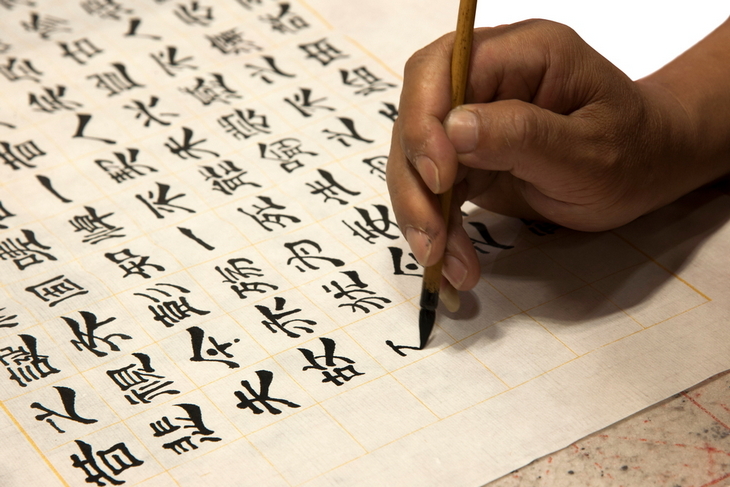
The Chinese language has been around for a whopping 6,000 years, making it one of the ancient granddaddies of written languages. And it’s a linguistic time capsule filled with stories, secrets, and a few awkward fashion choices). Its evolution has been a wild ride, shaped by geographical squabbles, political power plays, and cultural trends. It’s basically a 6,000-year-long soap opera, with characters changing, plot twists galore, and a few dramatic breakups along the way.
From Old Chinese to Modern Standard Chinese
Imagine trying to decipher ancient texts written in Old Chinese, the language of the Shang dynasty (1766-1123 BC). It’s like trying to read a toddler’s scribbles but with more historical significance. Over time, it evolved into Middle Chinese, the language of the Sui, Tang, and Song dynasties — the “golden age” of Chinese literature.
But spoken and written Chinese had a complicated relationship, like a couple who can’t decide what to watch on TV. This led to the rise of Classical Chinese, a fancy language used for formal writing until the late 19th century. Then, in the 20th century, Mandarin stepped up as the national language, and a standardized form of written Chinese emerged, known as Modern Standard Chinese.
It was a linguistic makeover aimed at unifying the country and making reading and writing accessible to everyone. Today, Modern Standard Chinese is the superstar of Chinese languages, spoken and taught worldwide.
The ‘sinification’ of foreign words
Throughout its long history, the Chinese language has been a bit of a cultural magpie, collecting shiny foreign words and giving them a Chinese makeover. This process, known as “sinification,” involves adapting foreign loanwords to fit the Chinese sound system and grammar. So, next time you hear a Chinese word that sounds vaguely familiar, remember that it might just be a foreigner who’s been “sinified.” Let’s look at some quick examples:
- Chocolate (巧克力 — qiǎokèlì): Similar to “coffee,” this is a phonetic transcription of the English word “chocolate.” Here, the characters are chosen for their sounds, not their meanings.
- Microphone (麦克风 — màikèfēng): The first two characters (麦克) are a phonetic rendering of “mic,” and the third character (风) means “wind” or “air,” implying the device’s function.
- Taxi (出租车 — chūzūchē): While not a direct phonetic adaptation, this is a semantic adaptation. It means “rental car.” The concept of a taxi was adopted, and a Chinese term was created to describe it.
The Chinese writing system
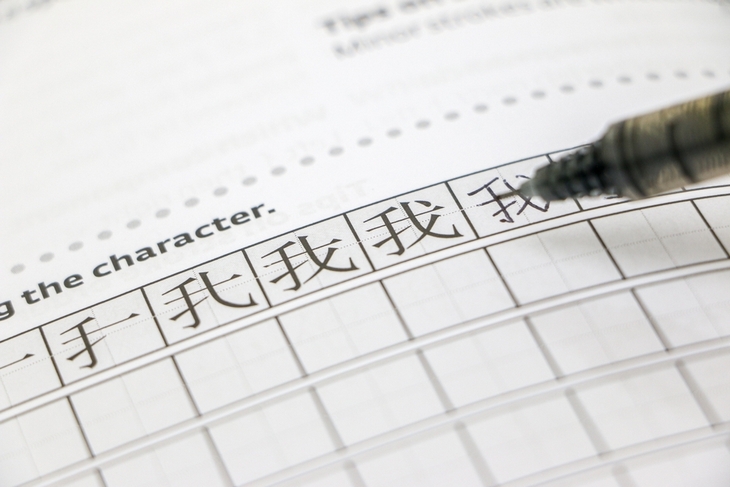
Forget your ABCs! The Chinese writing system is a whole different ballgame. Instead of an alphabet, it uses “Hanzi,” which are like tiny, intricate pictures that represent words or pieces of words. It’s a bit of a visual dictionary, where each character tells a story (or sometimes, a riddle). These characters have been around for thousands of years, evolving and changing like fashion trends, with different styles popping up throughout history.
Decoding the Hanzi (the six secrets of Chinese characters)
There are many ways to classify Chinese characters, but the “six writings” system is like the OG guidebook. It breaks down characters based on how they were created, revealing their hidden meanings:
- Pictographs: These characters are essentially mini-drawings that resemble the objects they represent. Think of 日 (rì) for “day,” which looks suspiciously like a cell on your calendar.
- Ideograms: These characters represent abstract ideas, like 向上 (xiàngshàng) for “up.” They are a visual representation of a concept; no drawing is required.
- Phono-semantic compounds: These are the brainiacs of the character world, combining a sound clue (phonetic element) with a meaning clue (semantic element). Take 河 (hé) for “river,” where 可 (kě) gives you a hint about the pronunciation, and 氵(shuǐ) tells you it’s related to water.
While Hanzi might seem daunting at first, remember that every character holds a story, a piece of Chinese culture, and a key to unlocking the language. And if you’re looking for a fun and effective way to master these characters, be sure to explore the Hanzi Movie Method. This unique approach transforms character learning into an engaging visual experience, making even the most intricate Hanzi feel like old friends.
The challenges and rewards of learning Chinese
Learning Chinese promises both challenges and immense rewards. The sheer number of characters, requiring a learner to master at least 2,500 for basic literacy, can initially seem like climbing a mountain. However, each character conquered is a milestone, a step closer to fluency.
There will be moments of frustration, times when tones seem to mock you, and characters blur into abstract art. But these challenges are what make the journey so exhilarating. They force you to engage with the language in a deeper way, to appreciate its intricacies and beauty. Every phrase you master, every conversation you have, is a triumph.
Learning Chinese isn’t just about memorizing words; it’s about building bridges and connecting with a culture that’s shaped millennia of history. It’s a challenge worth embracing, a puzzle worth solving, and a language worth loving. And remember, every character learned is a victory, a testament to your determination, and a gateway to a world of endless discovery.
Your journey to linguistic mastery begins now!
You’ve discovered that “Chinese” isn’t just a single language but a rich variety of dialects and histories. The sheer complexity might seem daunting, but it’s precisely this richness that makes learning Chinese so rewarding. Each character you master and each phrase you understand brings you closer to a deeper understanding of Chinese culture and its people.
Are you ready to begin? Join the Mandarin Blueprint Challenge today and experience the thrill of learning Chinese in just 30 days — completely FREE! This challenge is designed to provide you with the essential building blocks of Mandarin, teaching you to speak with confidence and clarity. You’ll gain lifetime access to our comprehensive curriculum, packed with engaging lessons and innovative techniques, and become part of a supportive community of over 1,600 fellow learners.
Don’t miss this opportunity to transform your language learning experience. Register now and receive exclusive course materials and bonuses worth $1,996. Join the Mandarin Blueprint Challenge for free and begin your adventure today!